The Royals are bringing in the fences
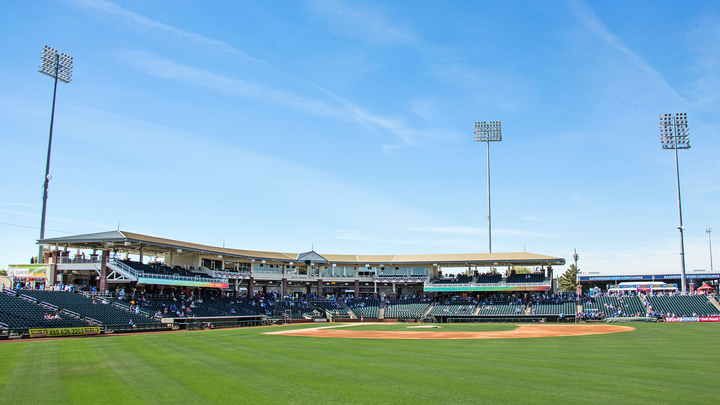
Kauffman Stadium is undergoing a change.
Who needs a new stadium when you can simply change the dimensions of the old one?
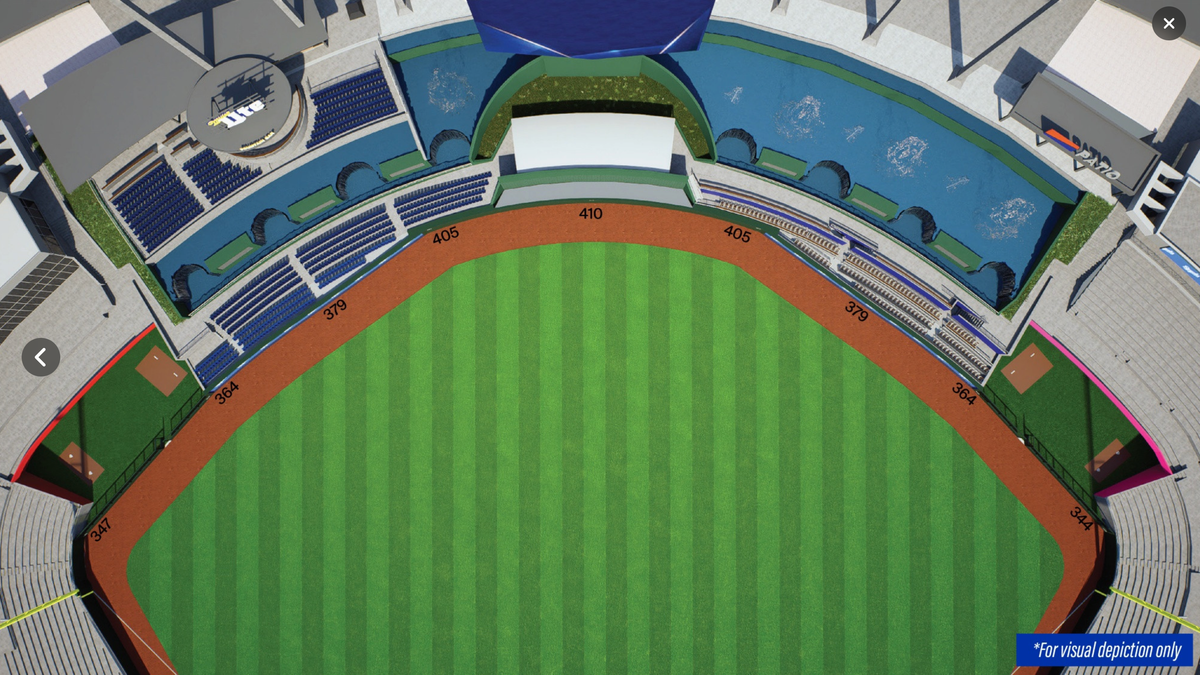
The Royals announced on Tuesday that for the 2026 season, they will be reconfiguring their outfield, bringing the walls in left and right field in by eight to 10 feet, while lowering the wall to eight and a half feet.
From the official press release:
The wall will come in 8 to 10 feet starting near each foul pole – the gaps will go from 387 feet to 379 – and taper back toward centerfield, which will remain 410 feet. The height of the wall will also change, from 10 feet tall in most places to 8 ½ feet. About 150 seats will be added in left field and about 80 new drinkrail seats in right.
The club’s research estimates the changes will take the run value of fly balls at The K from the bottom third of MLB ballparks to the middle, primarily through more extra-base hits.
The Royals, through their Bluesky account, shared an overhead view of what the new dimensions will look like.
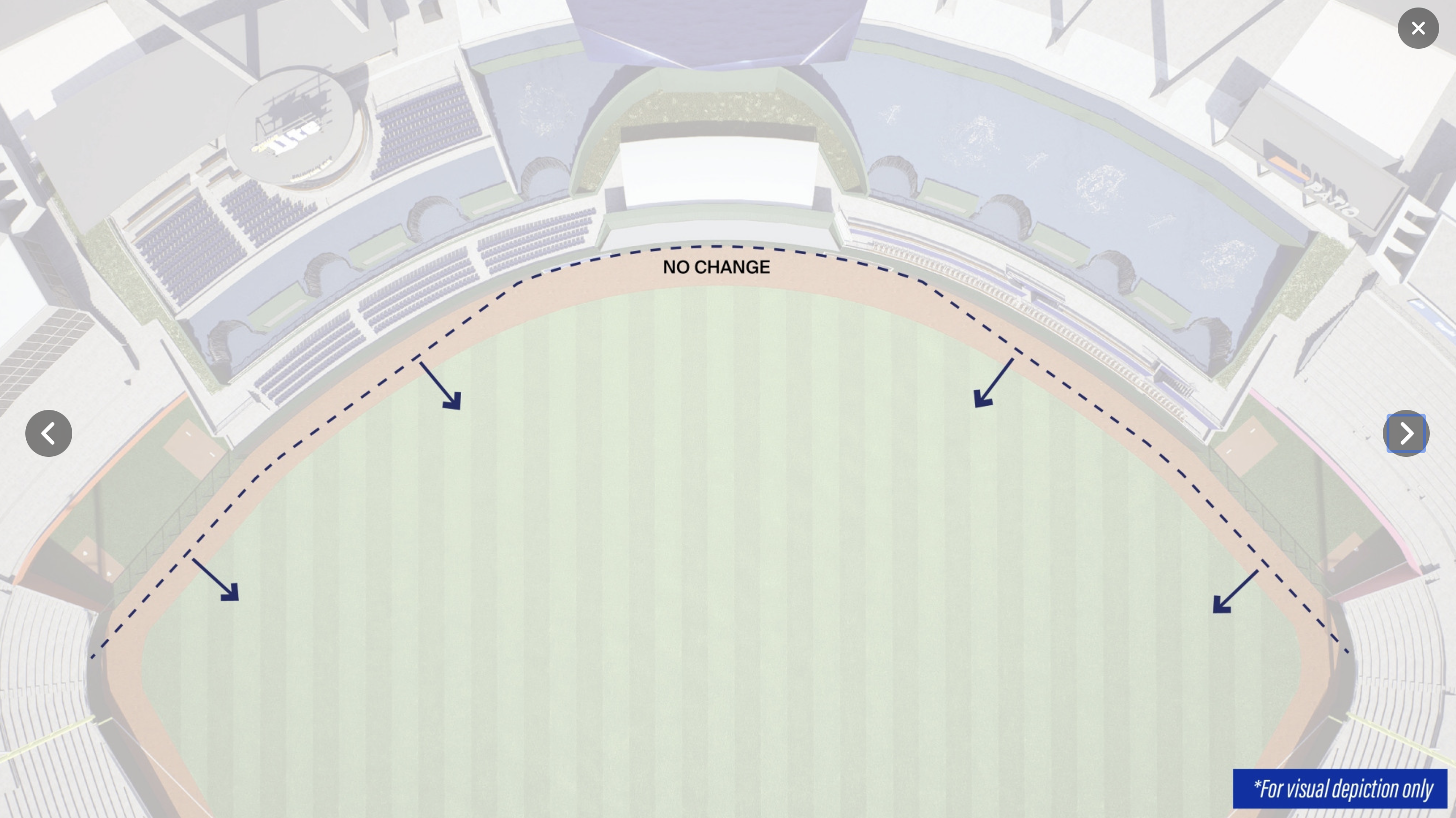
The stadium will retain its symmetry, something that makes it unique among most ballparks. The corners will remain the same at 330 feet. As you can see above, there will be no change in center field as 410 feet will remain the deepest part of the yard. Those distances—330 down the lines and 410 to center—are iconic. As a kid growing up, going to games at Royals Stadium, those numbers are etched in my mind when I think of the old outfield. Along with the massive dimensions, the walls were 12 feet high back in the day so you never, ever saw a home run robbery.
From the looks of these renderings, I do not think these changes will sacrifice the Kauffman Stadium aesthetic, which is important. Especially if John Sherman remains intent on tearing down the park. The next five seasons or so should be a celebration of Kauffman Stadium.

As far as Park Factor, the metric which measures run scoring environment, Kauffman Stadium plays fairly neutral. According to the three-year rolling averages, The K has a Park Factor of 101, making the run scoring environment ever so slightly above average. (Again, with all of these factor rates, 100 is average.) You won’t be surprised to know that Coors Field in Colorado has the highest Park Factor at 113. T-Mobile Park in Seattle has the lowest at 91.
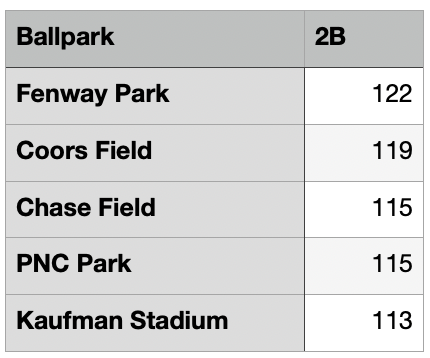
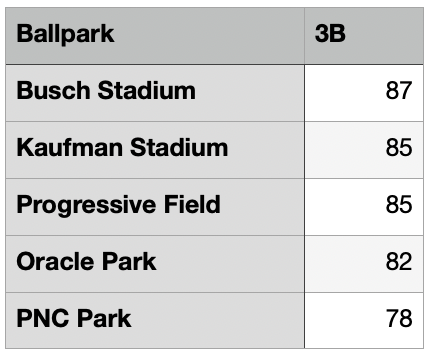
Kauffman has the second most square footage in play at 115,737 square feet, behind only Coors Field at 116,729 square feet. The mammoth size of Kauffman’s outfield means it is an extraordinarily favorable ballpark for doubles and triples.
Here are the top five Park Factors for doubles:
And the top five for triples:
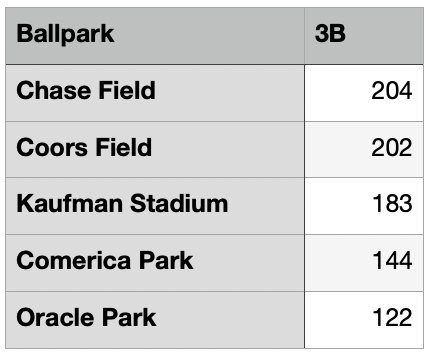
Besides Kauffman and Coors, Chase Field in Arizona is the other constant on the doubles and triples Park Factors. You shouldn’t be surprised to learn that Chase Field is the third-largest park square footage wise in the majors at 113,353 square feet. According to the Royals, bringing in the fences will actually see an uptick in extra base hits:
The club’s research estimates the changes will take the run value of fly balls at The K from the bottom third of MLB ballparks to the middle, primarily through more extra-base hits.
I’ll get to home runs in a moment.
It seems that the Royals think that by bringing in the power alleys but keeping center field intact, that won’t hamper the number of doubles and triples that we will see at the park. I don’t doubt the data, but I’m going to need to see that in action before I fully buy in.
Still, I absolutely adore that this decision was ultimately data driven. The Royals put months of research into what these changes would mean for the hitting environment, along with the impact changing the dimensions would mean for particular hitters. This feels very much like a conversation that turned into a research project. This one happened to be spearheaded by Royals Vice President – Research & Development/Assistant GM Dr. Daniel Mack.
Mack said they went back and forth on whether to alter the dimensions at the deepest part of the ballpark.
“I think that’s what made the project kind of exciting…When you do an optimization problem you kind of know the point at which you cross and you go, ‘we’re starting to get diminishing returns, things are going in the wrong direction.’ One of the most fun parts of the conversation…was center field. We kind of figured out there was an eight to 10 foot tolerance where things worked well in the favor that we were looking for, which was that fairness. Anything past that was not moving the needle enough or was starting to become too offensive.”
The theme of the press conference is in the above quote: Fairness.
Mack and General Manager JJ Picollo repeatedly stressed they were trying to adjust The K to make it a little more fair to the hitters, while not swinging the pendulum too far the other way that it would have a negative impact on the pitchers. Again, they stressed their data said that moving in the fences would provide a larger, positive affect to the hitters while minimally impacting their pitchers.
From Picollo:
“Our goal here isn’t to have an offensive ballpark. It’s to have a very fair ballpark. We don’t want it to turn into a bandbox and every ball up in the air turns into a home run. We just want hitters to be rewarded when they hit the ball well, particularly in the gaps.”

The K is, to no one’s surprise, one of the more difficult stadiums in the majors to hit a home run. That factor is 85, meaning there are 15 percent fewer home runs hit in Kansas City than we would expect. Kauffman ranks tied for 26th out of 28 rated stadiums.
Mack estimated that The K cost the Royals an extra home run per series.
“I think over the last couple of years, with our roster, it could’ve contributed to roughly 30 home runs. Give or take.”
The Royals had only four hitters who hit double-digits in home runs. All four underperformed their expected home run totals according to Baseball Savant.
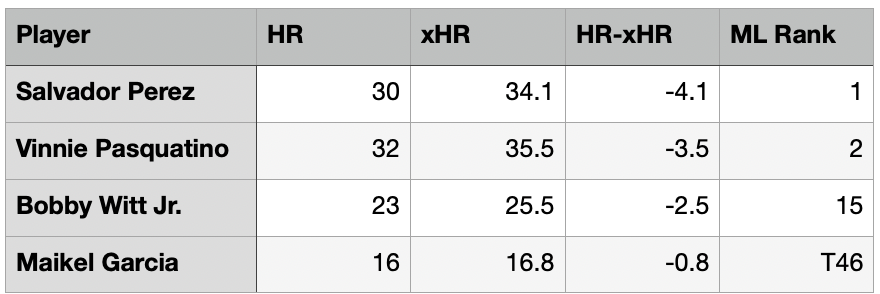
Ummm…kind of wild that the Royals had the top two underperformers in Salvador Perez and Vinnie Pasquantino.
Picollo had this to say about Witt and the affect The K has had on him:
“He was one of the players that was probably the most negatively impacted players by our ballpark when it comes to fly ball run production. So we have reason to believe his production will go up.”
In his four seasons with the Royals, Witt has hit 34 triples, with 22 of them coming at Kauffman Stadium. From Baseball Savant, here is the location of those triples:
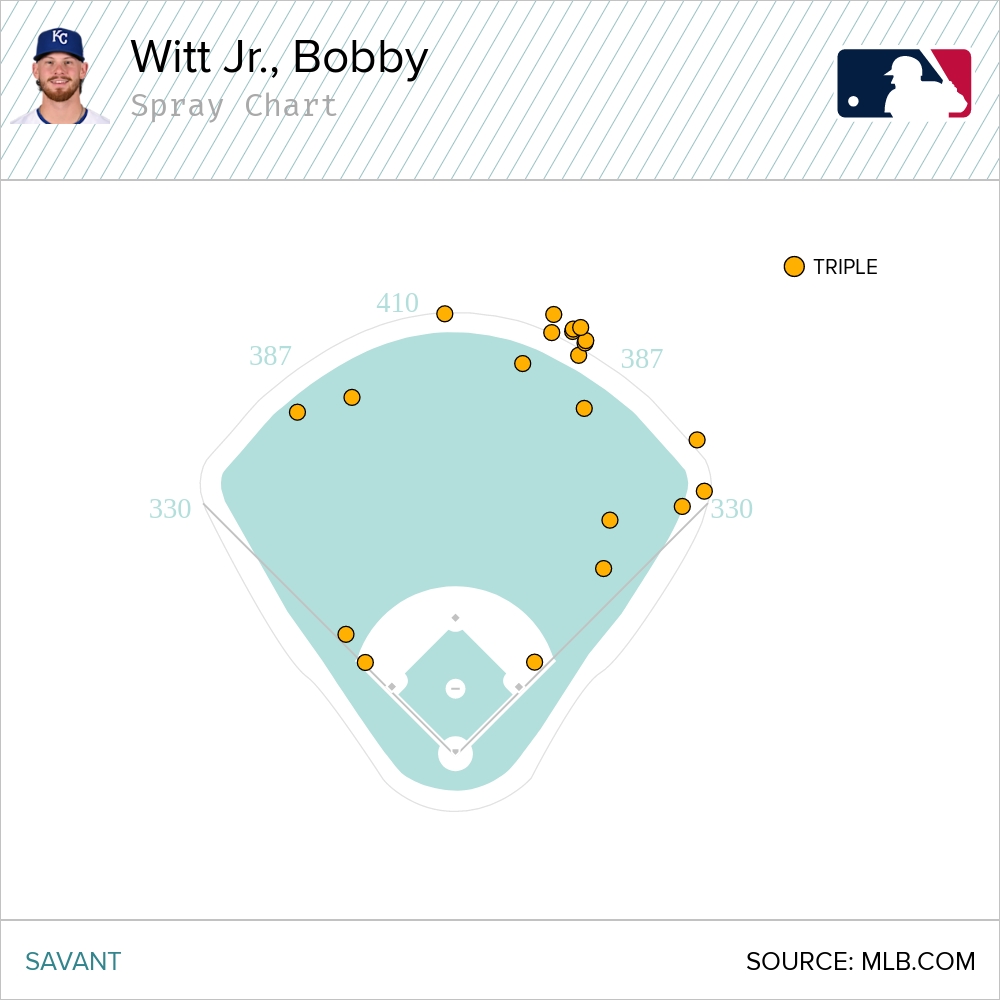
The location of the plots are where the ball landed. By my best guess, Witt would have about nine triples based on the data above. They would come from the balls hit down the lines and the one in center at the deepest part of the park. The four in the green at the gaps I figure would be doubles or possibly triples, given Witt’s 99th percentile sprint speed. Then the cluster of balls that look like they should’ve been home runs in right-center all probably would’ve actually left the yard.
This is what Mack had to say about Witt and the new outfield dimensions:
“I think we are probably going to help some of the opposite field power that he possesses. That will probably improve with these changes.”
You can see where that conclusion is coming from.
Again, this is all speculation. But it’s kind of fun to do.

Let’s speculate a little more! Using the diagram the Royals provided on the perspective of the new outfield, I overlaid plots of all outs at Kauffman Stadium in 2025 that were hit to left or right field and traveled between 344 and 410 feet. Again, this is highly unscientific.
There were 56 events. This is what it looks like:
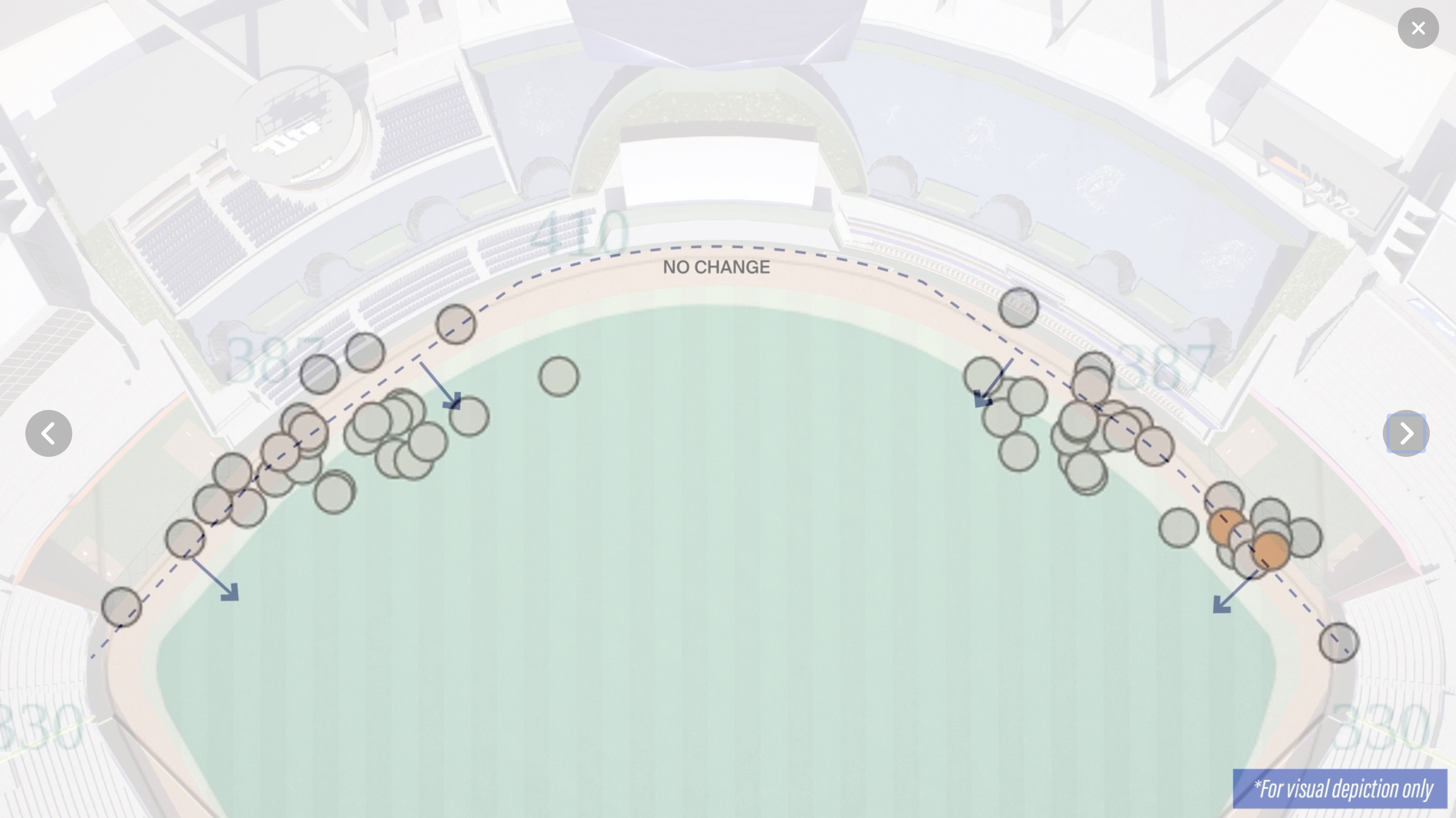
It looks like some of those fly ball outs would clear the wall at the reconfigured Kauffman. And a handful would present an opportunity for a little home run robbery.

To this point, I’ve focused on the offense and how it could possibly change with the new outfield dimensions. There’s another side to this equation: The pitching. Again, the Royals stressed in their press conference that they were seeking “fairness.” Their goal is to reward hitters who make solid contact and drive the ball to the gaps. You can’t just reward the home team. There is going to be a penalty for pitchers who give up those hits.
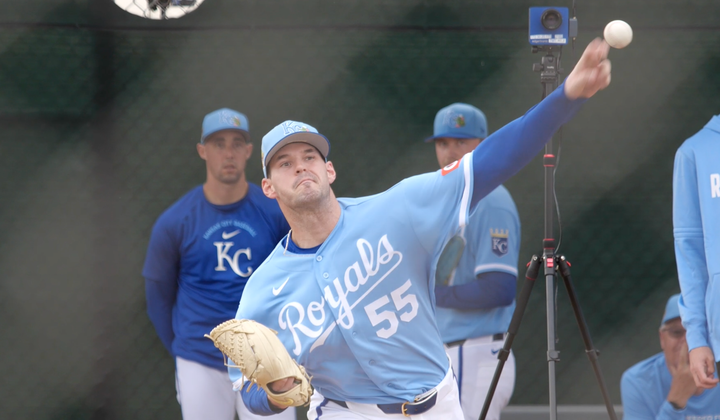
Consider Cole Ragans. The Royals ace is primarily a fly ball pitcher. In 2024, 58.6 percent of the balls put in play against him were hit in the air as either fly balls, line drives or pop ups. Using the same parameters as above, there were 12 balls that were put in play against Ragans in 2024.
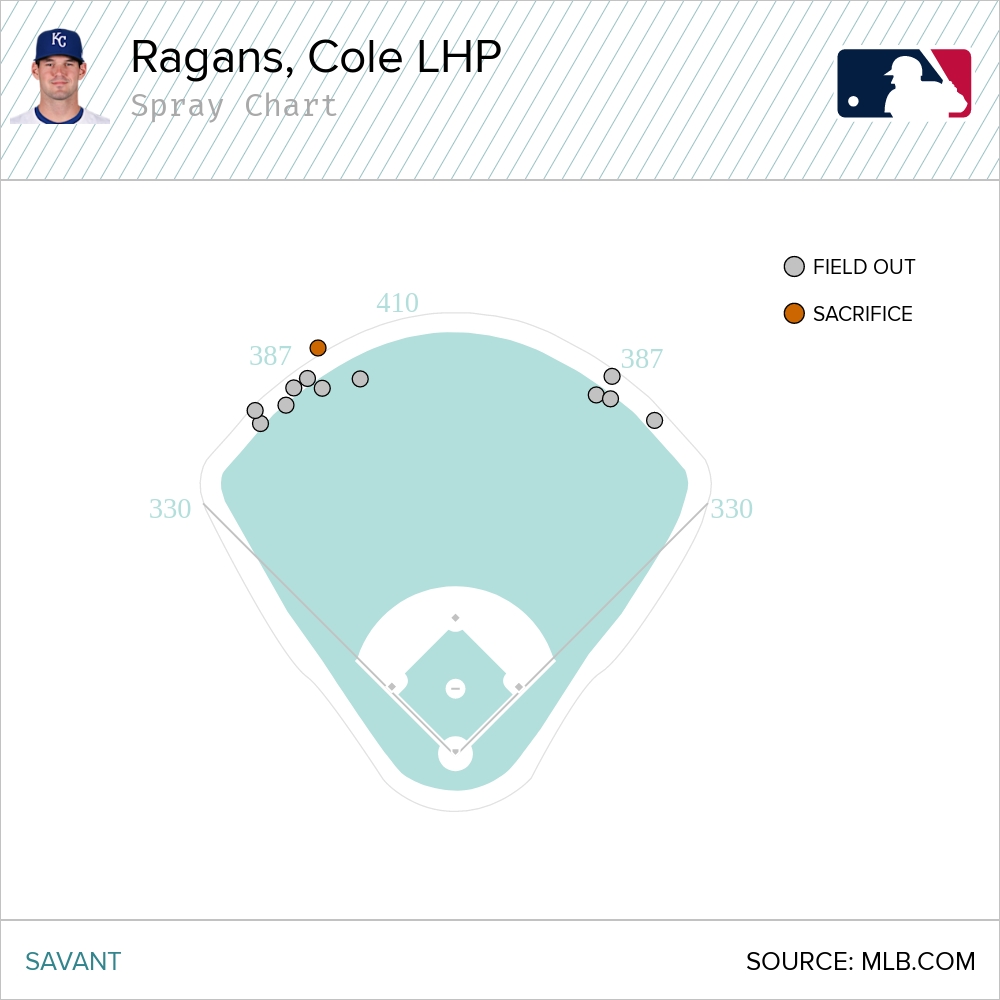
I cannot imagine all of those batted balls would remain outs. Some of these will be home runs. Some will be extra base hits off the wall. In the interest of fairness to the hitters, there will be some penalty for the pitchers. It’s inevitable.
These are the Royals who threw at least 60 innings last year, ranked by HR/FB rate:
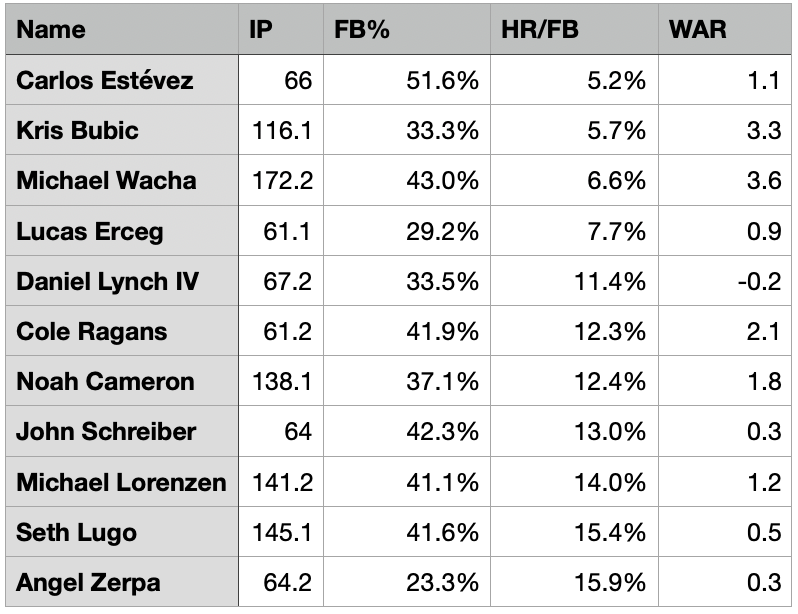
We can postulate that a pitcher like Bubic with a low overall fly ball rate and a very low (and probably unsustainable) HR/FR rate probably won’t get stung as badly as someone like Ragans or Seth Lugo. Lugo will probably be the starter who suffers the most as his HR/FB% is routinely in the double-digits. Ragans is usually a bit lower than he finished with last season.

Whew.
I feel like I’ll just leave it here as I’ve written over 1,600 words to this point and feel as though I’ve barely scratched the surface. The Royals have given us a lot to think about and speculate on. We know nothing for certain about how these changes will impact individual players, but I think we can safely say that baseball at Kauffman Stadium will be different going forward…More offense and more thrills.
The outcomes may not be what we would expect, but the potential is exciting. Salvy can add to a growing Hall of Fame resume with a few more bombs, Bobby could go for a 40-40 season and The Pasquatch could become that slugging first baseman the Royals have rarely had. And how fun will it be when a Royals pitcher gives up a bomb and we all go, “That would’ve been an easy fly out at the old K?”
What do you think?
Comments ()