Four big flies and one big win
The Royals go solo homer happy as they salvage a massive win in their series against the Angels.
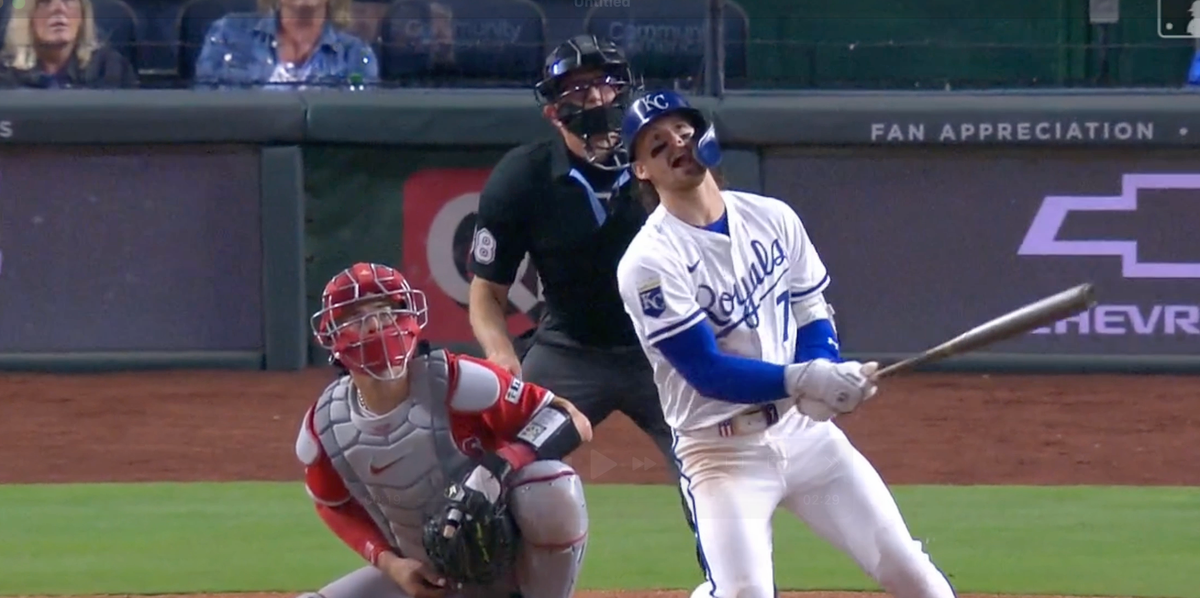
Before the Royals came up to the plate in their series finale against the Los Angeles Angels on Thursday, they trailed 3-0.
Starter Noah Cameron recorded the first two outs in the top half of the first before things went momentarily off the rails: Taylor Ward singled, Jo Adell walked (which was probably a good thing given what he’s done to the Royals in this series) and Luis Rengifo yanked a 1-1 slider over the left field wall to give the Angels that three-run advantage.
It felt grim. The Rengifo home run gave the Angels a 75 percent win expectancy in that moment.
Yet the Royals were unconcerned. They chipped away. In the end, there were no rallies…just dingers. Glorious rockets sent soaring through the Kauffman night. And by the time the last home run cleared the wall, the Royals had the lead and ultimately a 4-3 victory in their back pocket. It was a massive victory for the Royals, in a stretch where wins have been difficult to come by.

The guy who got the home run barrage started was one of the more unlikely hitters in this lineup to exit the yard. Except when Adam Frazier digs into the batter’s box, he has to get a warm and fuzzy feeling when he sees Kyle Hendricks out on the mound. With 37 plate appearances against Hendricks, Frazier has faced the Angels starter more than any other pitcher, save Kevin Gausman (44 PAs). Among pitchers Frazier has faced at least 20 times, his .459 OPB and .647 slugging percentage against Hendricks make him Frazier’s absolute favorite pitcher to face.
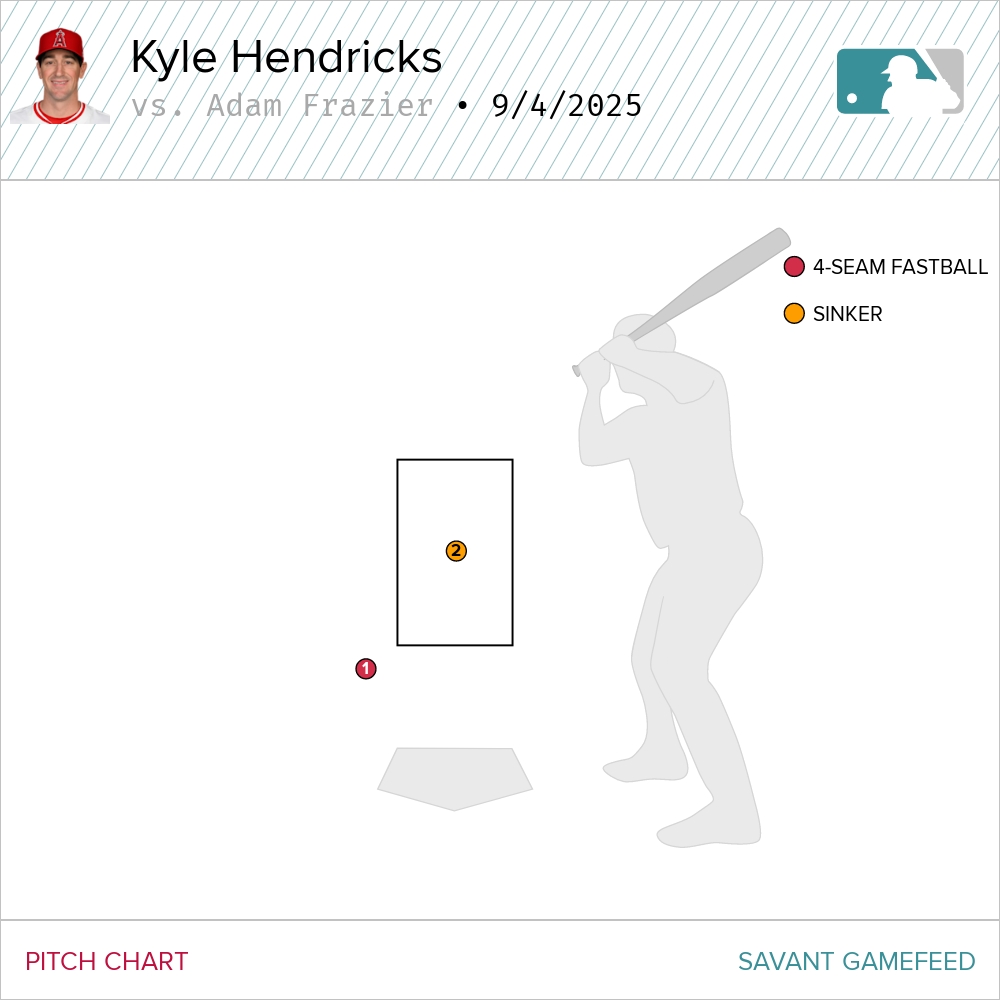
That was the backdrop for their first confrontation in the second inning. Hendricks started Frazier off with a four-seamer low and away for a ball. His second pitch was a mistake. If Kyle Hendricks is going to make a mistake to Adam Frazier, you betcha Frazier is going to cause some pain.
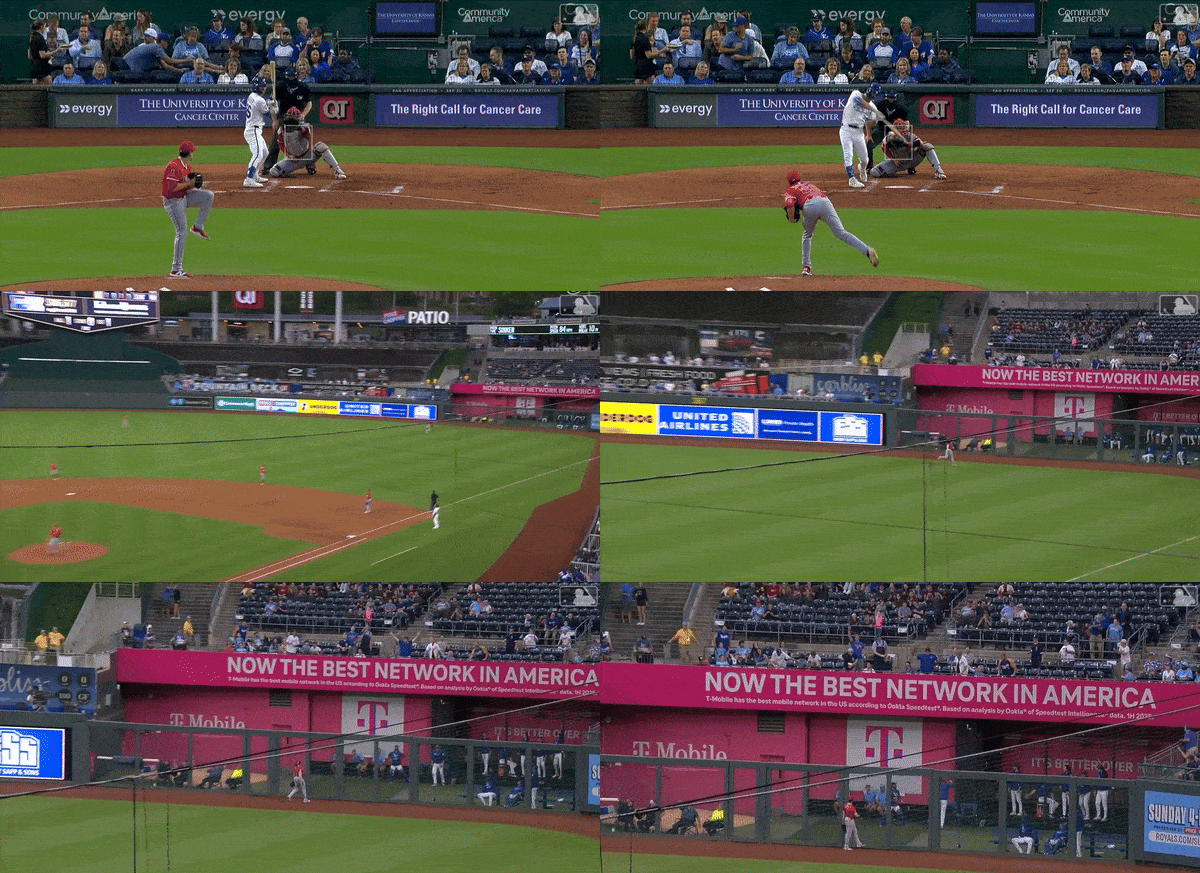
For the record, that was 393 feet worth of pain. Hendricks probably has nightmares about facing Frazier. He should. Although, as I noted above, if Hendricks is going to leave a sinker in that particular location, punishment will usually be swift and severe, no matter the hitter.
That put the Royals on the board at 3-1. The Angels win expectancy at that point was at 69 percent.

In the first matchup between Hendricks and Pasquantino back in the first inning, the Angels starter opened with a sinker and then alternated between that pitch and a changeup. It was a six-pitch at bat that ended with Pasquantino hitting a single against an elevated Hendricks sinker.
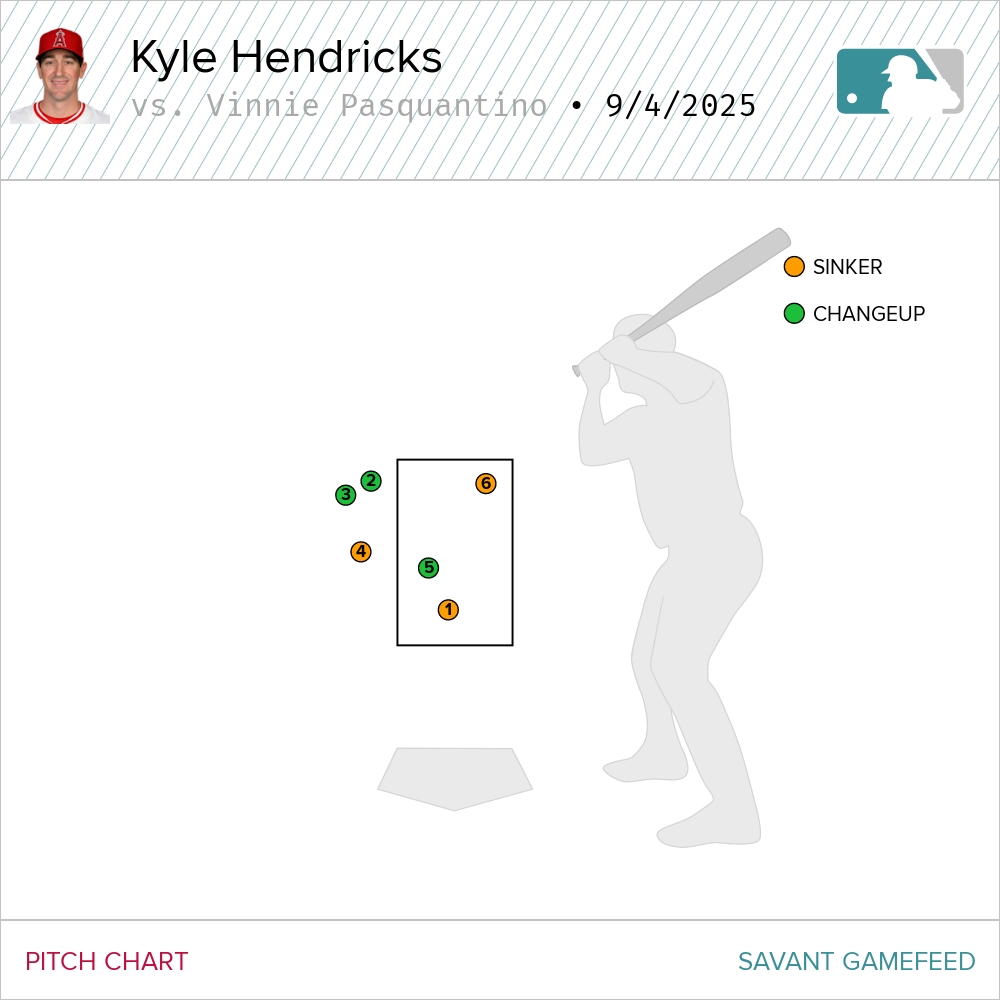
Something tells me Pasquantino was hunting sinker again. This was the first pitch Pasquantino saw in his second confrontation with Hendricks.
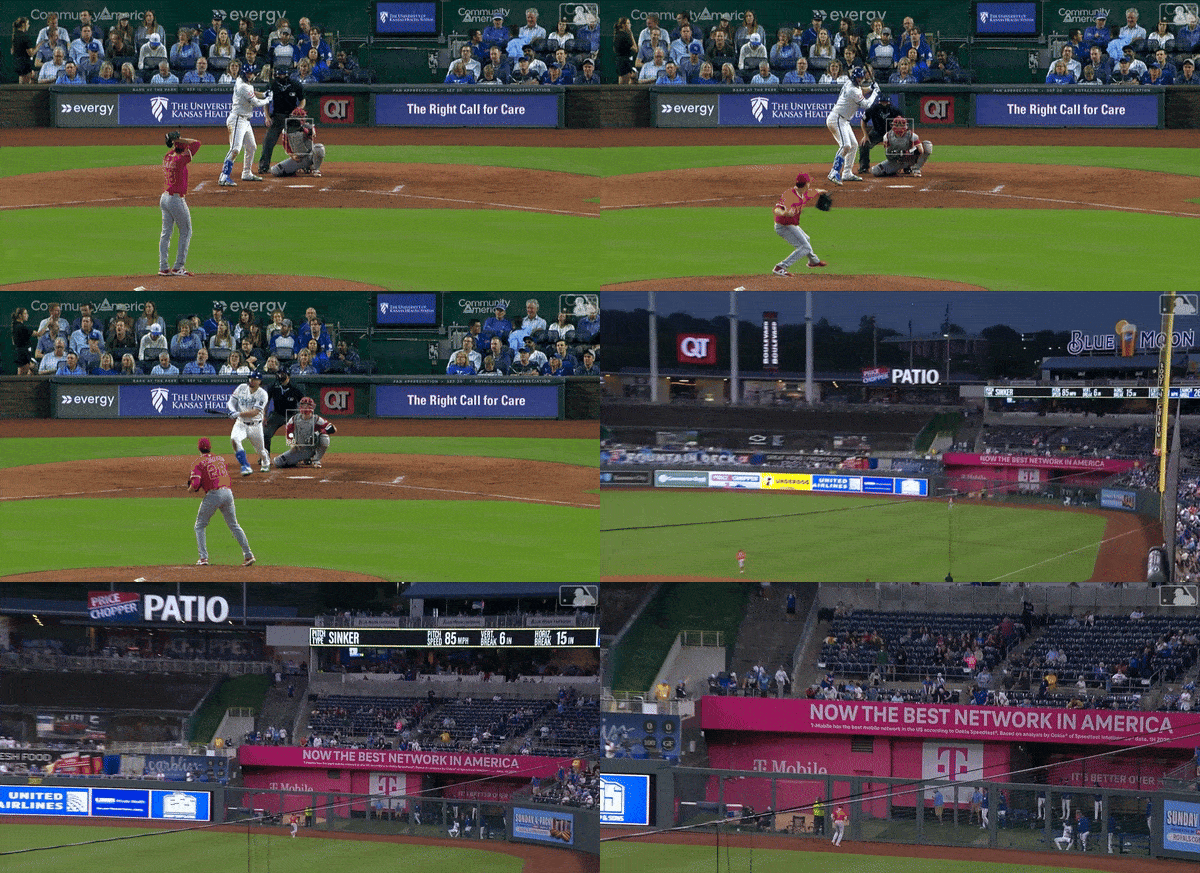
Do you think every Vinnie Pasquantino looks the same? It sure seems that way. Those bombs are either clearing the bullpen or landing among the relievers. If you want to catch a home run ball, I would advise buying a ticket right behind said bullpen.
That was Pasquantino’s 29th home run of the season. Here’s where they’ve landed.
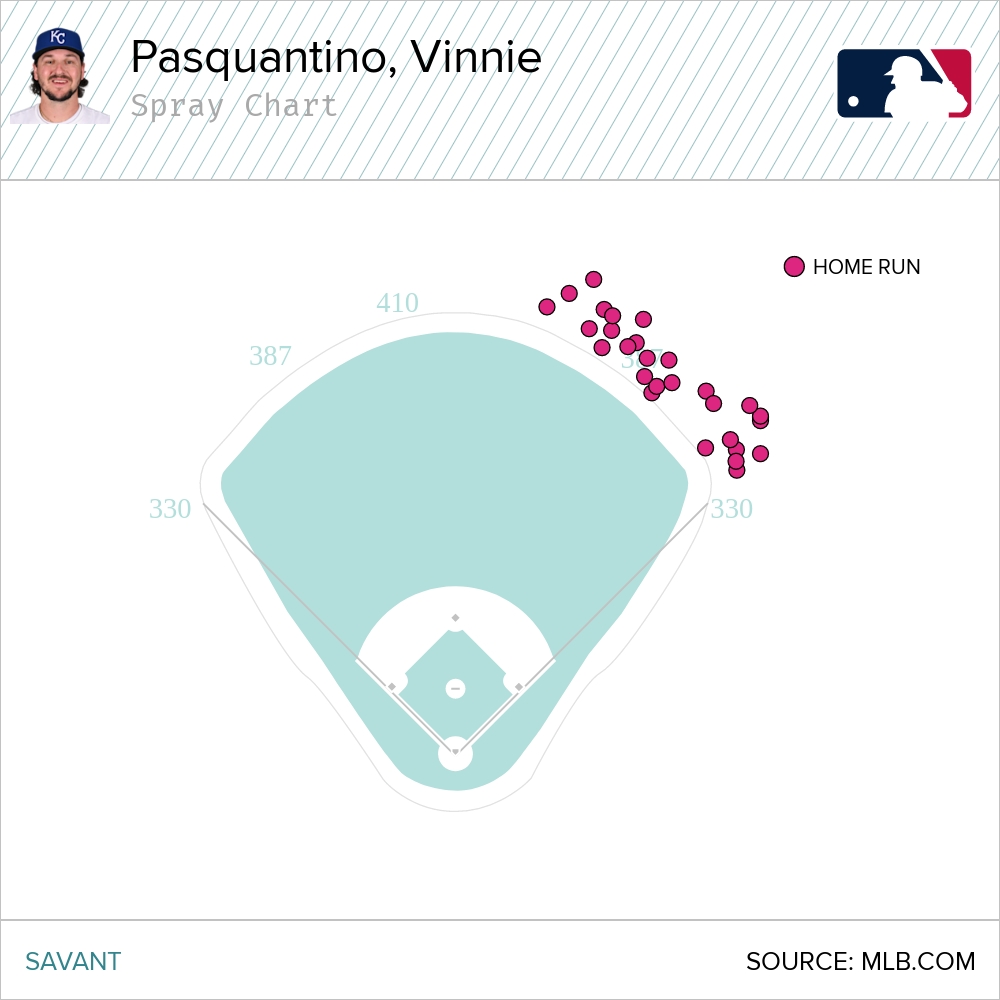
The old baseball adage is “See the ball. Hit the ball.” For Pasquantino, it’s “See the ball. Pull the ball. Run around the bases.”
In the aftermath of Pasquantino’s home run that made the score 3-2, the Angels still held the win expectancy advantage at 58 percent.

All I know is if you’re going to throw a home run party, Salvador Perez is going to expect an invitation. And I also know that of all the home runs that will be hit, Salvy’s will probably be the most ridiculous of the bunch.
Witness.
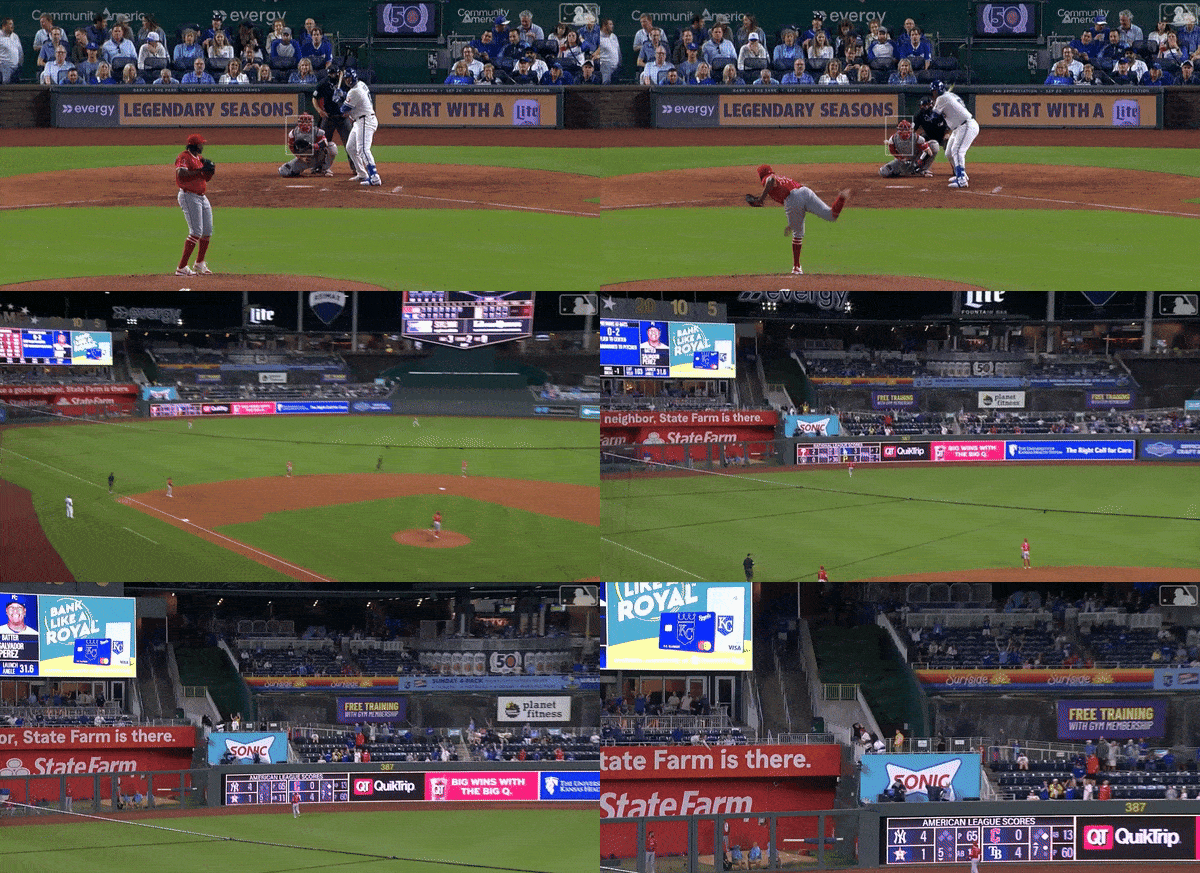
At 134 yards, I think that’s a solid eight iron. Ok, the baseball traveled 402 feet.
This was Angels reliever José Fermin’s first batter of the night. He’s your typical bullpen guy in 2025: Fastball that runs hot at around 97 mph, complemented by a slider at 90 mph. This is how Fermin approached Perez:
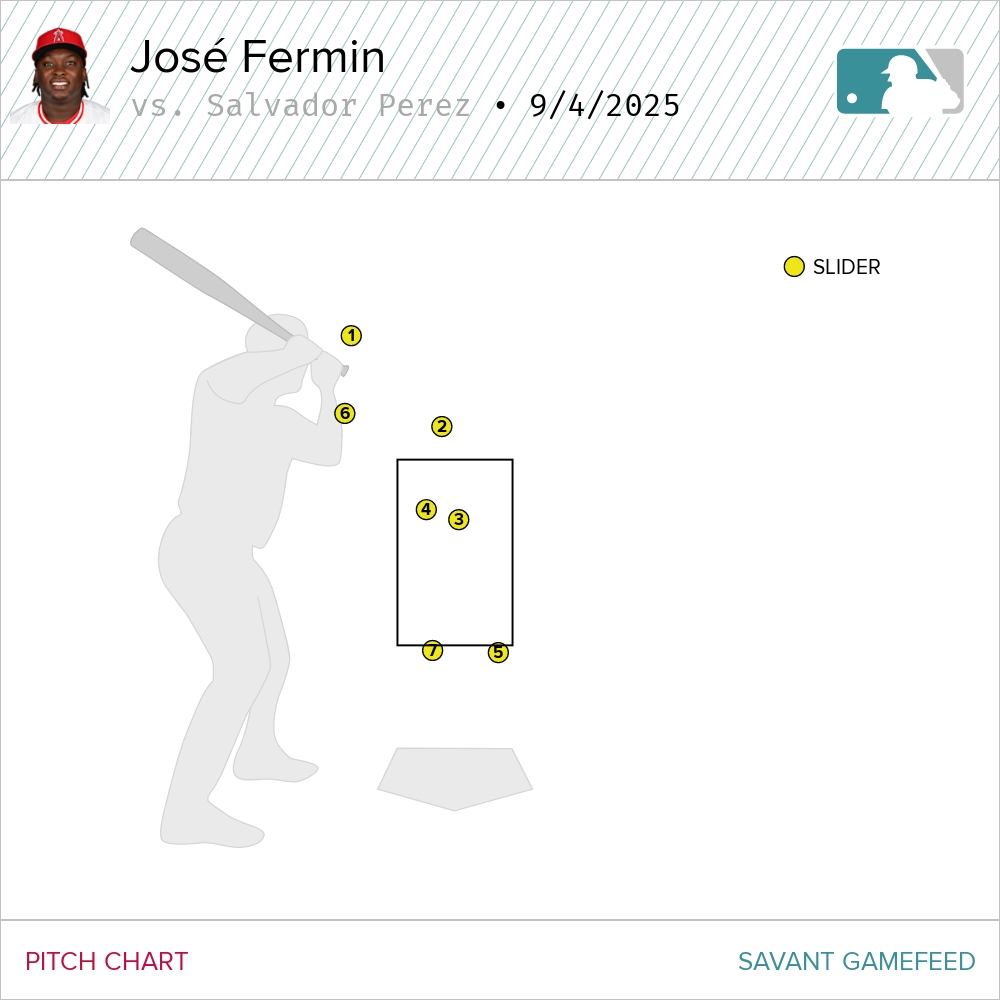
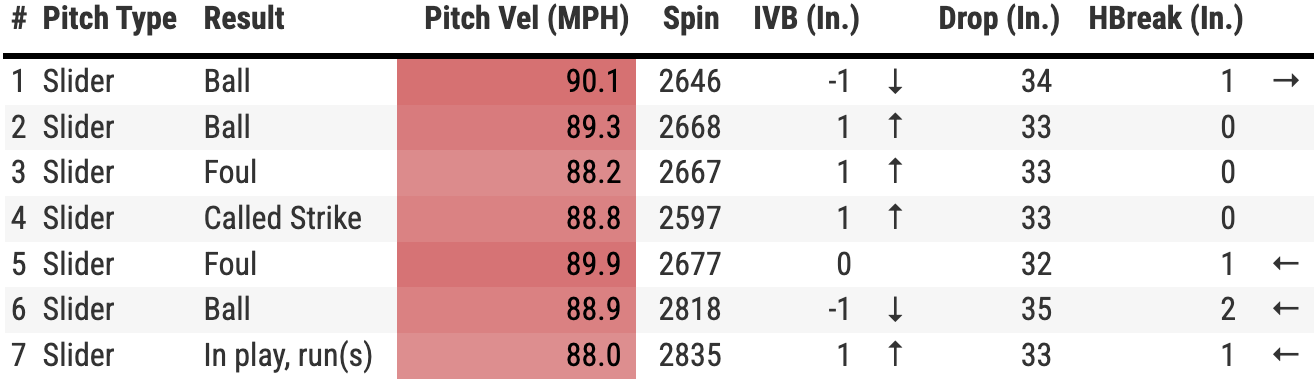
I’ve never called pitches in a ballgame in my life. But I would think that against a hitter of Perez’s caliber, even in a season where he’s put up a 100 OPS+, that I might mix in a four-seamer up in the zone. I get that the sixth slider of the at bat was up and in to Perez, setting up something low and preferably away, but if you watch that GIF again, the Angels backstop Oswald Peraza set his target in the middle of the plate. Sure, you don’t want to walk the leadoff hitter in the later innings of a one-run ballgame. But if you throw Perez seven sliders in a row and place that seventh slider anywhere over the plate, Perez is going to cook.
When the ball landed, the Royals had fought back from that early deficit and tied the game at three. The expected win percentage tilted in their favor at that moment, to 59 percent.

In the aftermath of the Royals 4-3 loss on Wednesday, Bobby Witt Jr. stood at his locker and took the blame. It was his inability to make a defensive play in the eighth that proved decisive. It’s the standup thing to do in that moment, but to point the finger at Witt in a loss is a bit extreme. Yes, that was a big moment in the race to the playoffs, but when we’re settling up accounts at the end of the season, Witt will have provided much more winning moments than the one that happened at shortstop in the second game of this series.
Witt is a superstar. He does superstar things. Like this:
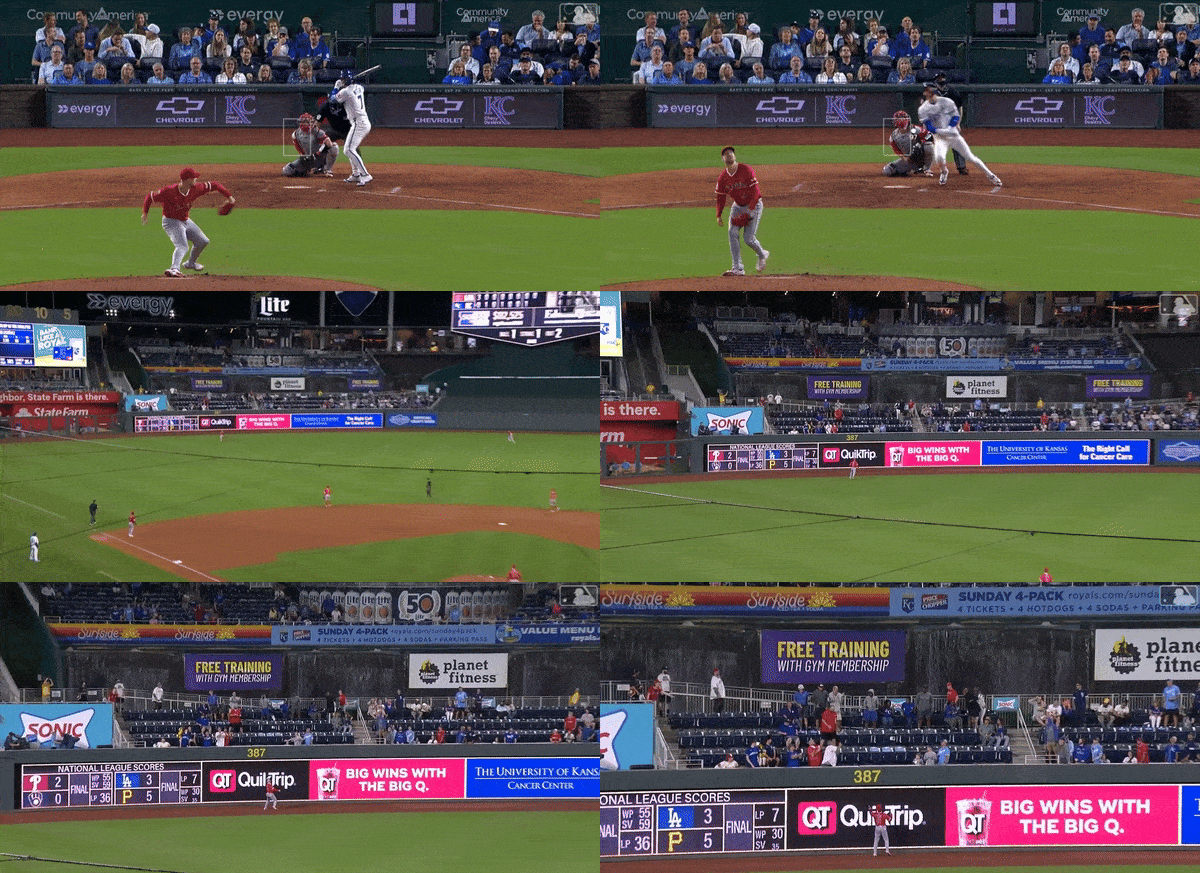
Look at how Witt pulls his hands in to get around on a 97 mph four-seamer from reliever Ryan Zeferjahn. That’s the third pitch of the at bat where the first two were sweepers in the mid-80s. I don’t know…there’s just something delightful about Witt crushing a ball delivered with that velocity in that location.
Witt has hit 34 home runs in his career now against four-seam fastballs. That was the second-furthest inside that he’s turned on and blasted out of the park.
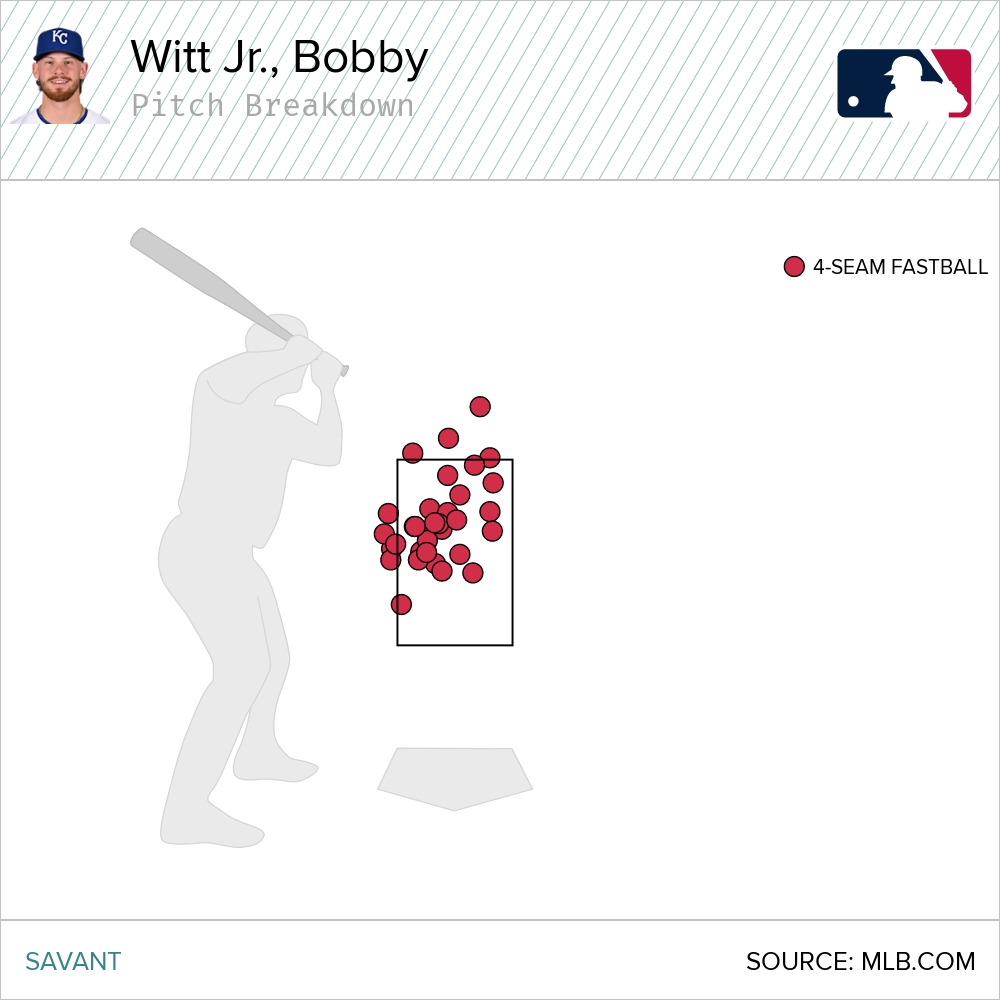
The pitch you’re looking for in the chart above is the highest on the inside. The one immediately below that pitch is the Jhoan Duran grand slam. You know that one.
With a launch angle of 35 degrees (watch that GIF again to see how that ball just seems to go directly into a suborbital arc), it was the highest launch angle of Witt’s career where he hit a home run off a four-seamer.
This one broke the tie and gave the Royals a 4-3 advantage. In that moment, it gave the Royals a win probability of 85 percent. This is what the final graph looks like:
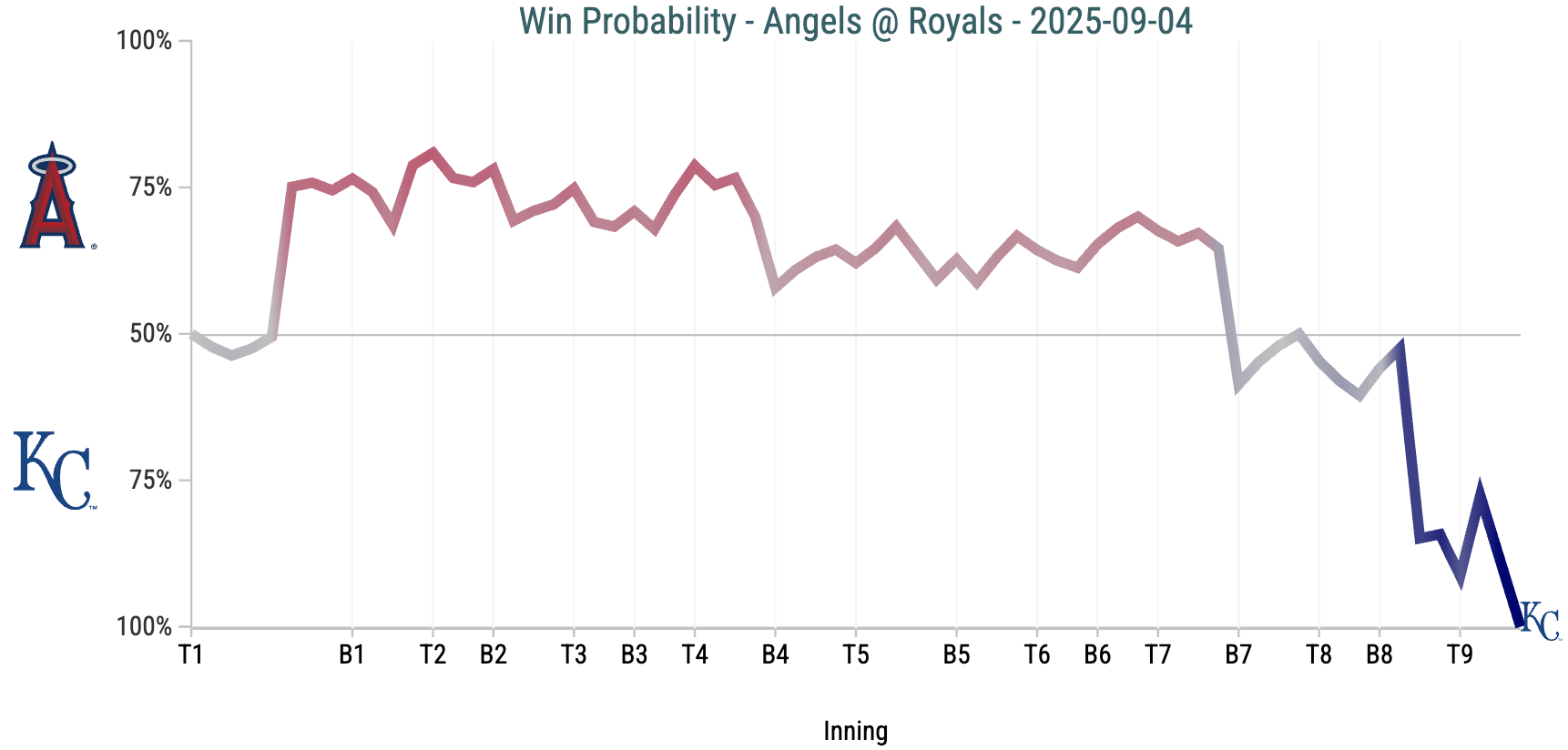
I don’t know how this season is going to end up over these next several weeks, but if they do somehow push their way into a Wild Card spot, we can look back at this game and these four swings as playing a huge moment.

Of course, this moment doesn’t happen if Cameron doesn’t gut through four more innings. He did not have his best stuff (he walked five batters and gave up five hits), but somehow kept the Angels from further acts of malice. Cameron was followed on the mound by Jonathan Bowlan, who was nearly flawless through his two innings. Matt Quatraro then went to his key guys in Lucas Erceg and Carlos Estévez to nail down the win. Erceg’s job was to keep the game tied. He whiffed Mike Trout to lead off the eighth and got the dangerous Adell on strikes to close out the inning. Estévez gave up a one-out double because where would the fun be in a one-two-three inning? He then punched out the next two hitters to close out this crucial victory.
The Royals needed this.

Let’s close with some fun from Baseball Reference. This was the fifth time in franchise history that the Royals hit four solo home runs in a game to account for all of their scoring. It was the first time they’ve done that since 1987.
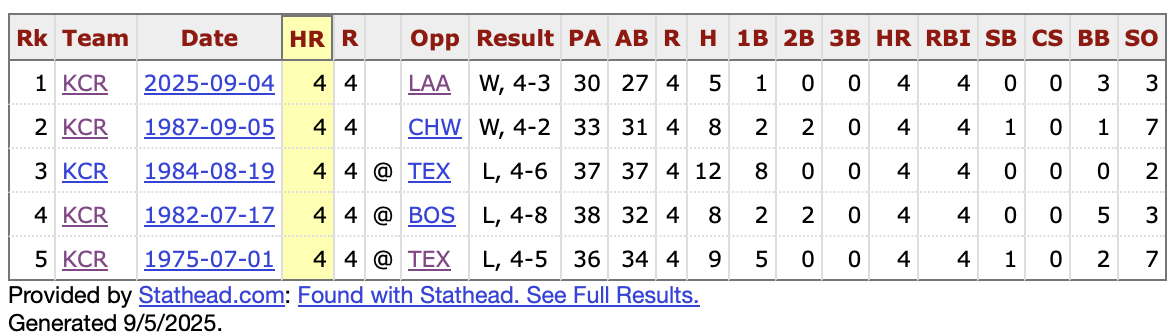
What’s wild to me is that the Royals, in hitting four home runs, had only one other hit the entire evening—a first inning single from Pasquantino.
Don’t you just love baseball?

Comments ()