Game 2: Pasquatch sighting
Vinnie Pasquantino drives in five as the Royals take the series and open their crucial homestand with back-to-back wins.
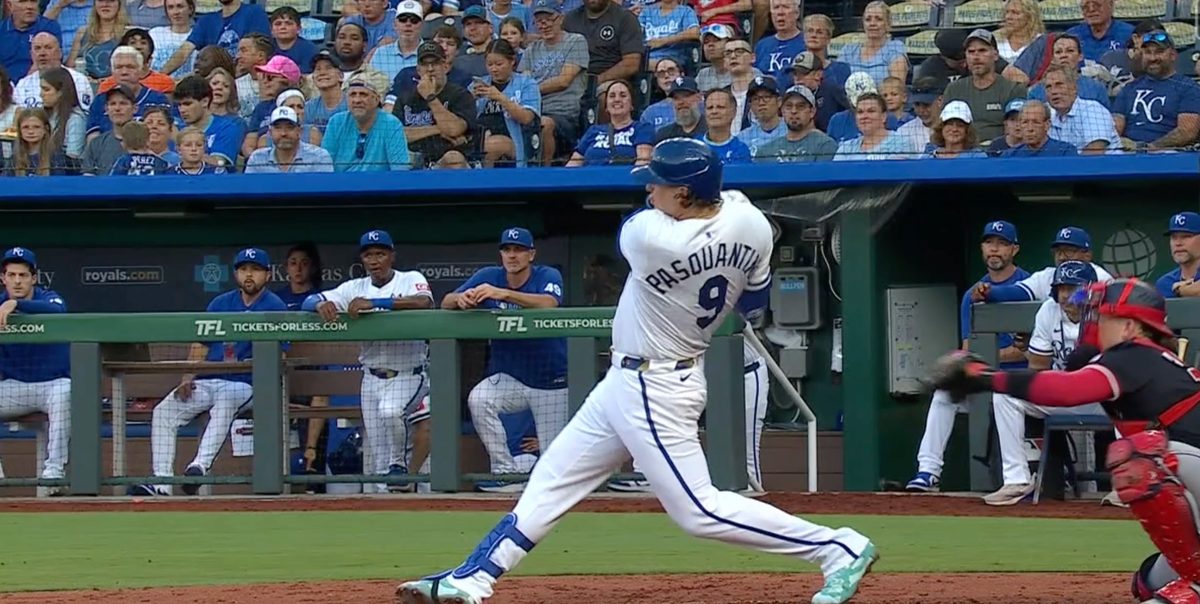
Vinnie Pasquantino provided the offensive fireworks. Jonathan India gets credit for a late inning assist. And the Royals, behind another strong start from Michael Wacha, took the second game of this most important series against the Washington Nationals by a score of 8-5.
They are now 2-0 on this ten-game homestand, where they need to go, at a minimum, 7-3. So far, so very good.

This was one of those games where it felt as though everyone contributed, but it was the number three hitter, Pasquantino, who put everyone on his back.
The Royals first baseman got the team going in the first with a callback to 2024…a sacrifice fly. Last season, Pasquantino led all Royals—and tied for the major league lead—with 13 sacrifice flies. That number is way down this year as he had only hit two coming into Tuesday’s game. That’s caused him to see his productivity to drop with runners on third and fewer than two outs. Last year, Pasquantino brought home 59 percent of the runners on third with fewer than two outs, an exceptional rate. This season? He’s down to 47 percent. That’s a little below the league average and just not what we saw last season.
Don’t sleep on the fact that the Pasquantino sac fly was set up by some insanely smart baserunning from Maikel Garcia. Garcia started off the game with a walk. He went from first to third on a ground ball out. A ground ball to the pitcher. And he didn’t even draw a throw.
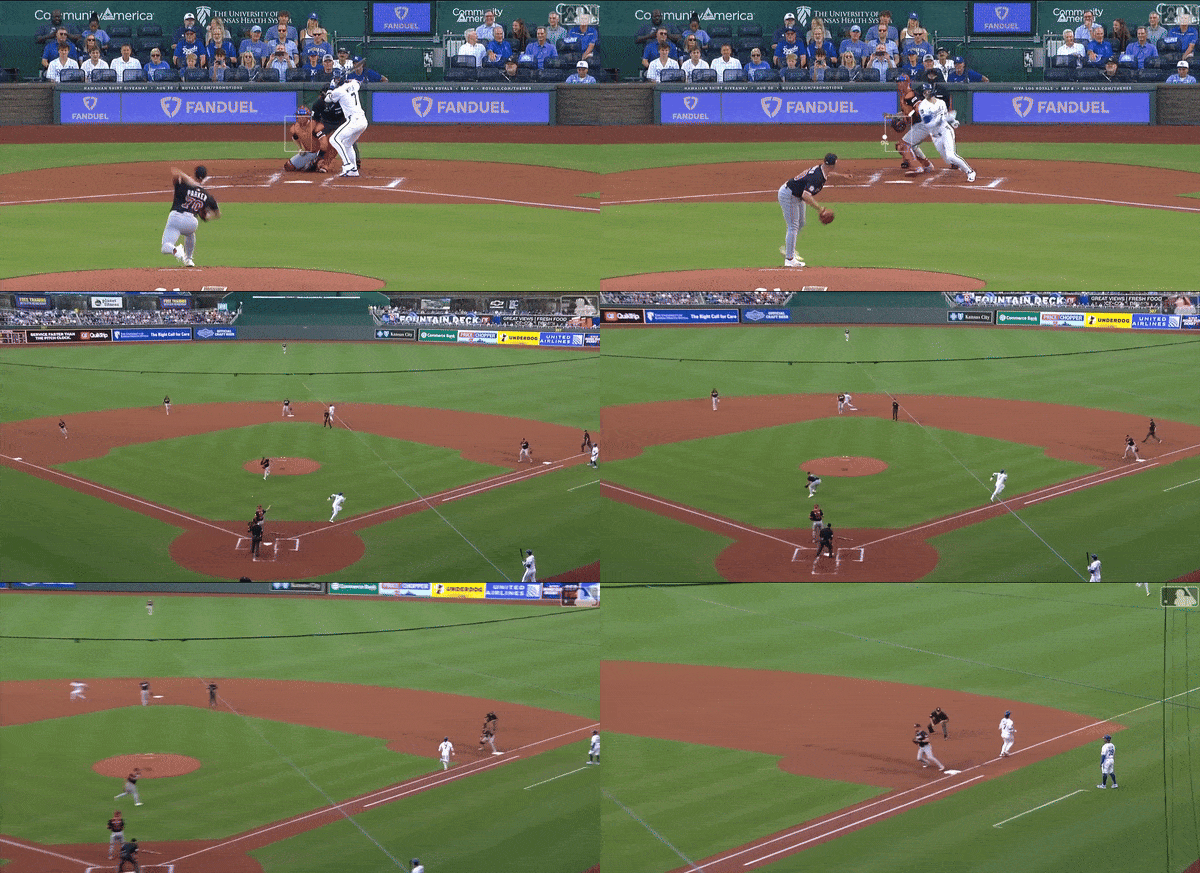
Garcia was running on the 3-2 pitch to Bobby Witt Jr.. I thought it was a borderline nutty idea from Garcia, especially given that the pitcher, Mitchell Parker, is a left,y so that when he picked up the ball and spun to throw to first, he definitely saw that Garcia was breaking for third. Maybe that, combined with Witt’s speed, was a factor in Parker making a suboptimal throw that Nationals first baseman Nathaniel Lowe had to make an awkward grab on the short hop. Maybe a nutty idea is just what the Royals needed to get things kicked off on Tuesday.
Whatever works. As long as it does, in fact, work.
There was still plenty of baseball to play and a 1-0 first inning lead isn’t anything to get excited about, but a play like the one Garcia made really kind of serves notice. I mean, read this again: Garcia went first to third on a ground ball back to the pitcher. The Royals aren’t playing it safe. They’re going to grab this game and take charge.

Pasquantino followed up his sac fly in the first with a total laser in the third, a three-run home run on a line and barely over the wall in right field.
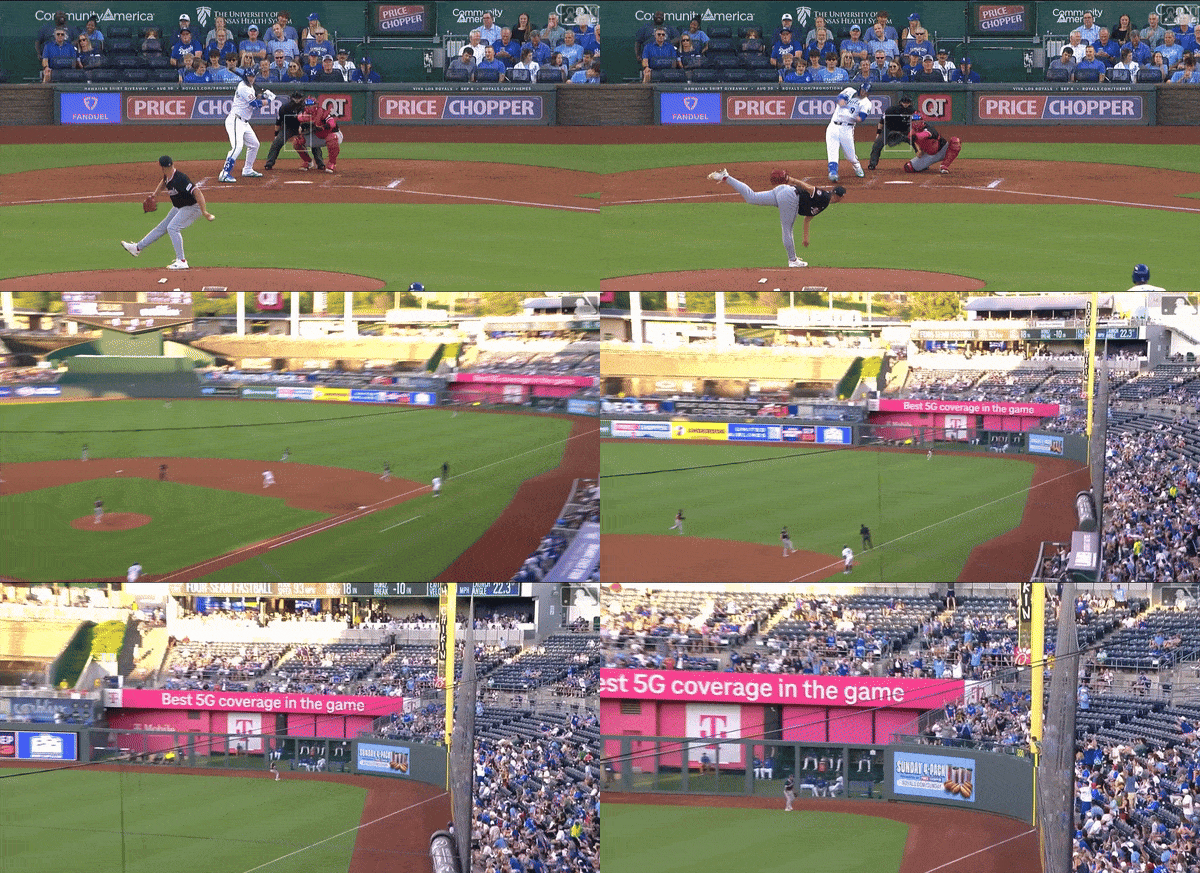
Statcast tells me that’s a home run in 26 out of the 30 major league ballparks, so I’ll believe it. But that was a very un-Pasquantino-like home run.
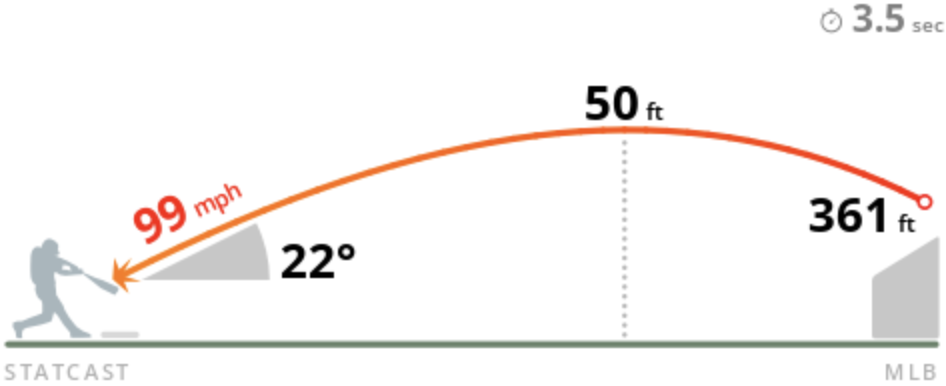
At 22 degrees on the launch angle, it was his lowest on a home run this year. And at 361 feet, it was the second-shortest dinger he’s hit in 2025. His shortest checked in at 358 feet.
Still, a three-run bomb is a three-run bomb. I’m just observing over here. This was clearly Pasquantino’s night. The Royals scored four runs through the first three innings, with all of them coming courtesy the lumber of one Vinnie Pasquantino.

While Pasquantino was busy driving in runs, starter Michael Wacha was carving up Nationals hitters. He faced just one over the minimum through his first four innings, needing just 43 pitches to record 12 outs.
The four-seam/changeup combo continues to work for Wacha. He threw those two pitches nearly 50 percent of the time, and while the velocity was down about a tick from his average four-seamer, he maintained about 11 mph of separation between the two offerings. The stuff isn’t especially elite, but he works the corners, changes speeds and keeps hitters off balance. You know, he pitches like a veteran. On Tuesday, 12 balls were put in play off Wacha against either his change or four-seamer. The average exit velocity on those balls in play was 80 mph. Give me that soft contact all day long.
Wacha’s defense betrayed him a couple of times in the later innings. In the fourth, Randall Grichuk seemed to have trouble playing a ball out of the right field corner when Luis García Jr. hit a two-out triple that drove home Riley Adams from first. Adams probably would’ve scored anyway (García was going to get at least a double), but Grichuk not coming up cleanly with the ball removed any doubt. In the fifth, CJ Abrams hit a one-out triple and Wacha walked the next batter, Josh Bell, to put runners on the corners. Paul DeJong followed for the Nationals and hit a popup to shallow center. Witt dropped back and the center fielder, Tolbert, raced in. This is Witt’s defensive bread and butter. Nobody goes back on a pop fly like Witt. He made a motion calling for the ball and then…the ball just clanged off his glove.
Although the Royals were able to get a force out at second, Abrams scored from third. It was an uncharacteristically poor defense moment from Witt. One of those, if that play happens exactly like that 100 times, Witt records 99 outs. That just happened to be the one time.
After that play, Wacha walked another batter and his night was done. It was another fantastic showing by the Royals, dare I say, newest ace. Covering his last six starts, Wacha has thrown 36 innings while allowing 21 hits and seven walks. He’s allowed just one home run in that stretch and his ERA is a tidy 2.00. Yep. Wacha has picked up the “ace” mantle from Kris Bubic who took it over for Cole Ragans. Nice how that has worked.

The Royals added three more runs in the sixth. Witt walked to lead off the inning and with two outs, Grichuk—who had a home run stolen from him by center fielder Robert Hassell III in the fourth—swung at the first pitch and drilled one down the right field line. Yes, triples may be baseball’s most exciting play, but I equally enjoy watching Bobby Witt Jr. motor from first to home.

This was the Win Expectancy chart for Tuesday’s game.
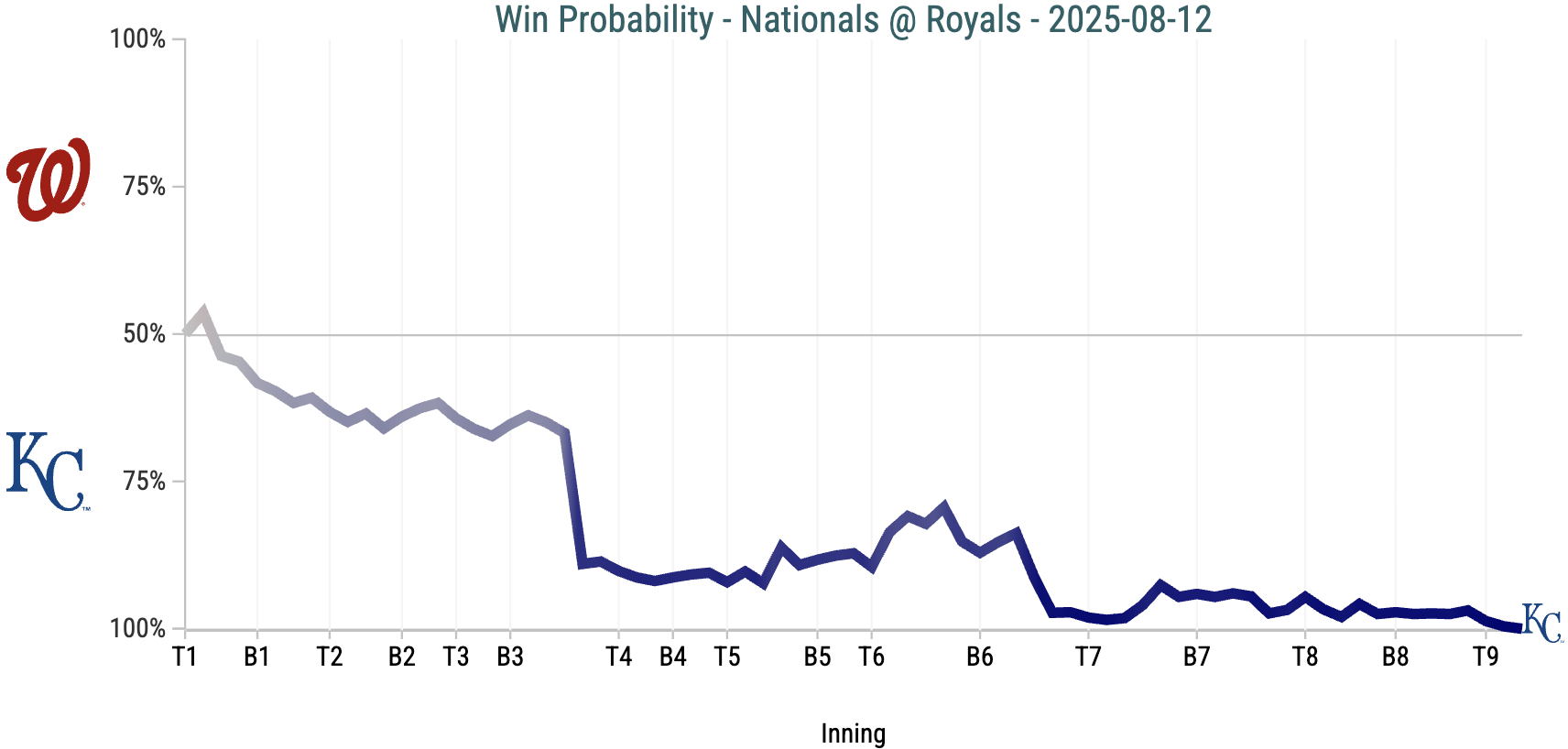
I understand the data is the data, but the Royals didn’t seem too serious about putting this one to bed. The margin should’ve been larger. The Nationals should not have been anywhere near the Royals after the sixth inning. Yet, they chipped away, bit by bit, run by run. Again, the outcome of the game was never seriously in doubt. At least according to the percentages. Still, it felt a little tighter than it should have.
Maybe it felt that way when Sam Long should’ve completed a 1-2-3 seventh inning but was slow covering the bag on a ground ball hit to first. A double and single followed and the Royals 7-2 lead was down to 7-4. Again, not really in any kind of danger. Buuuuuuut, it didn’t exactly feel safe. John Schreiber came into the game to get the final out of the inning with no further damage.
Taylor Clarke had the eighth and allowed a leadoff single to DeJong, moved him to second on a wild pitch and then saw him score on a single from Daylen Lile. Again, minimal danger. But they just kept hanging around!
Thank goodness for Lucas Erceg, who looked sharp in working a clean ninth inning to record his second save of the year.
Even though Pasquantino led the way on offense, this win was, in fact, a total team effort.

Our daily check of the Wild Card race has Seattle saying hot against Baltimore (1-0), Cleveland winning again against Miami (4-3), the Yankees doing what they do to the Twins (9-1) and the Red Sox thumping the Astros (14-1). The only good news on the night was the Diamondbacks edging the Rangers on a ninth inning Ketel Marte home run.
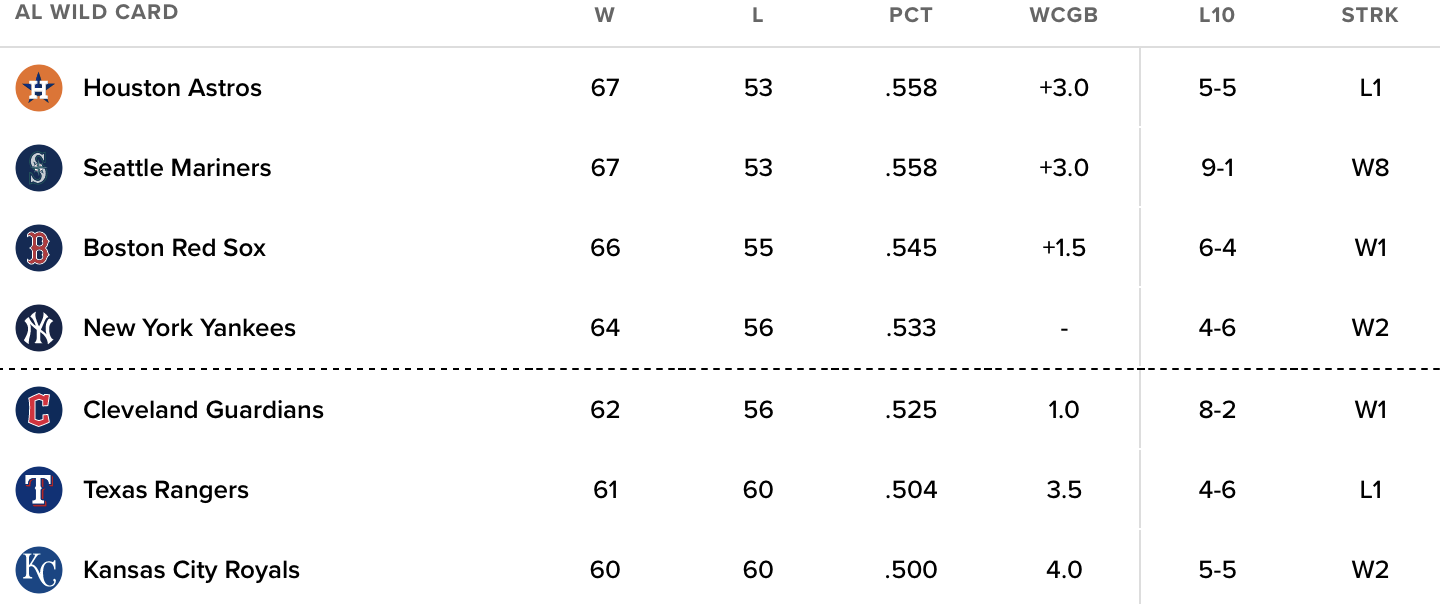
The Mariners and Astros are now tied for the lead in the AL West. The Mariners are a dangerous team. I figure this to be the last time we discuss them in the Wild Card space, as I fully expect them to continue to charge ahead in their battle for the division title.

Comments ()