Pushing for the postseason
Thoughts on the Wild Card race, Ryan Bergert's sweeper, the Royals rotation and what the upcoming schedule can mean for the Royals.

What’s a good target victory number to qualify for the Wild Card? Since Rob Manfred and the Major League owners went for the money grab that is the expanded postseason, it seems like 86 wins is a decent target to aim for. That was the victory total for the Tigers last year as the sixth seed and the Tampa Bay Rays in 2022 who qualified in the similar position.
Here is how the Wild Card standings look as of Friday.
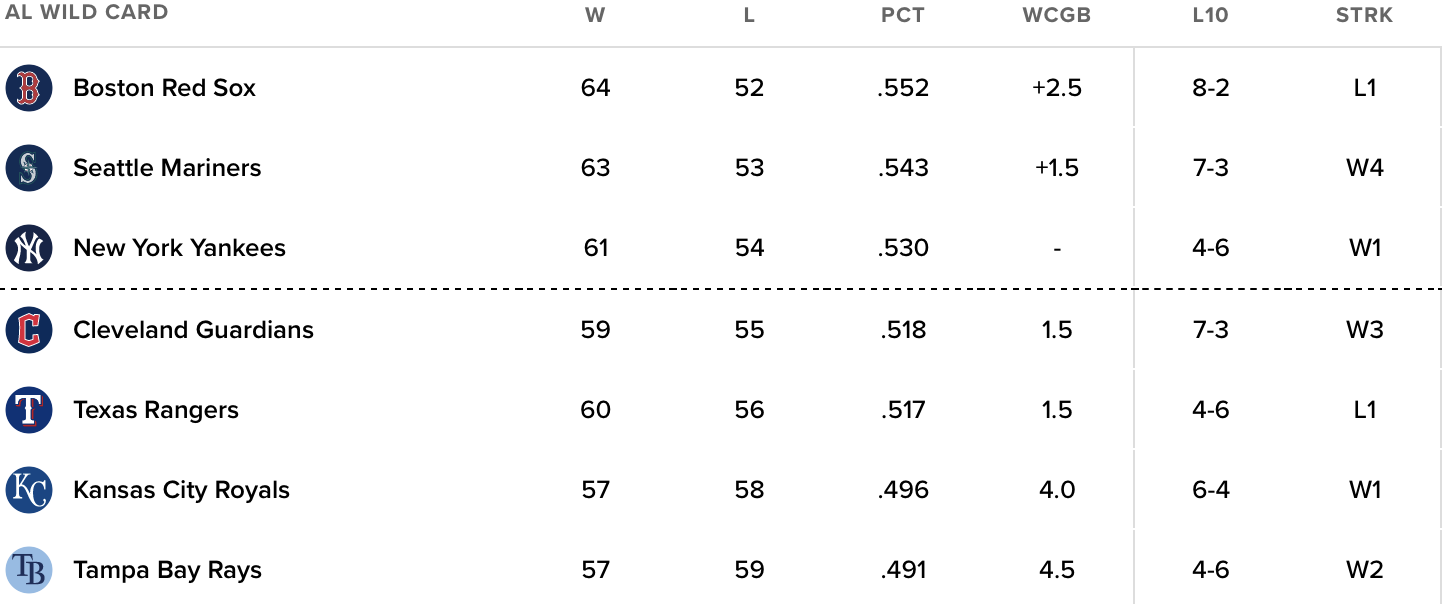
Looking at the Yankees, they’re currently playing .530 baseball. In order for them to get to 86 wins, they will have to play at a .532 clip over their remaining 47 games. So they basically have to maintain.
There’s a bit of a gap between the three who are currently in the qualifying position and the next group of four.
What teams above scare you the most? Ask me today and I’ll tell you I think Boston and Seattle will get in the postseason. Either as Wild Cards or as division winners. (The current leaders of the West and the East, Houston and Toronto, will also qualify.) If you think Detroit is a lock—more on that below—then that leaves one spot left among five teams. As usual, this far down the Wild Card pecking order, you can identify weakness in every club. But of the five, I think the Rangers have the stuff to push their way into the Wild Card party. As of today.
That leaves the Royals on the outside. But right of this moment, they’re very much in the mix, and that’s all we can ask. There will be meaningful baseball played in Kansas City in August and September.
Who are your postseason teams as of today?

I didn’t write about Ryan Bergert’s Royals debut, but there were some interesting things about it that I wanted to touch on. First, was his mix of pitches. In his first four starts for the Padres earlier this year, the right-hander offered a sweeper about 15 percent of the time. That rate dropped over his next three starts for the big league club that were spread out over about a five week period. Then, he was throwing the sweeper generally less than 10 percent of the time, instead relying mainly on his slider as his primary non-four-seamer pitch.
On Tuesday in Boston he really altered his pitch selection, with about a quarter of Bergert’s offerings was the sweeper. He got to this rate by throwing fewer sliders and four-seamers.
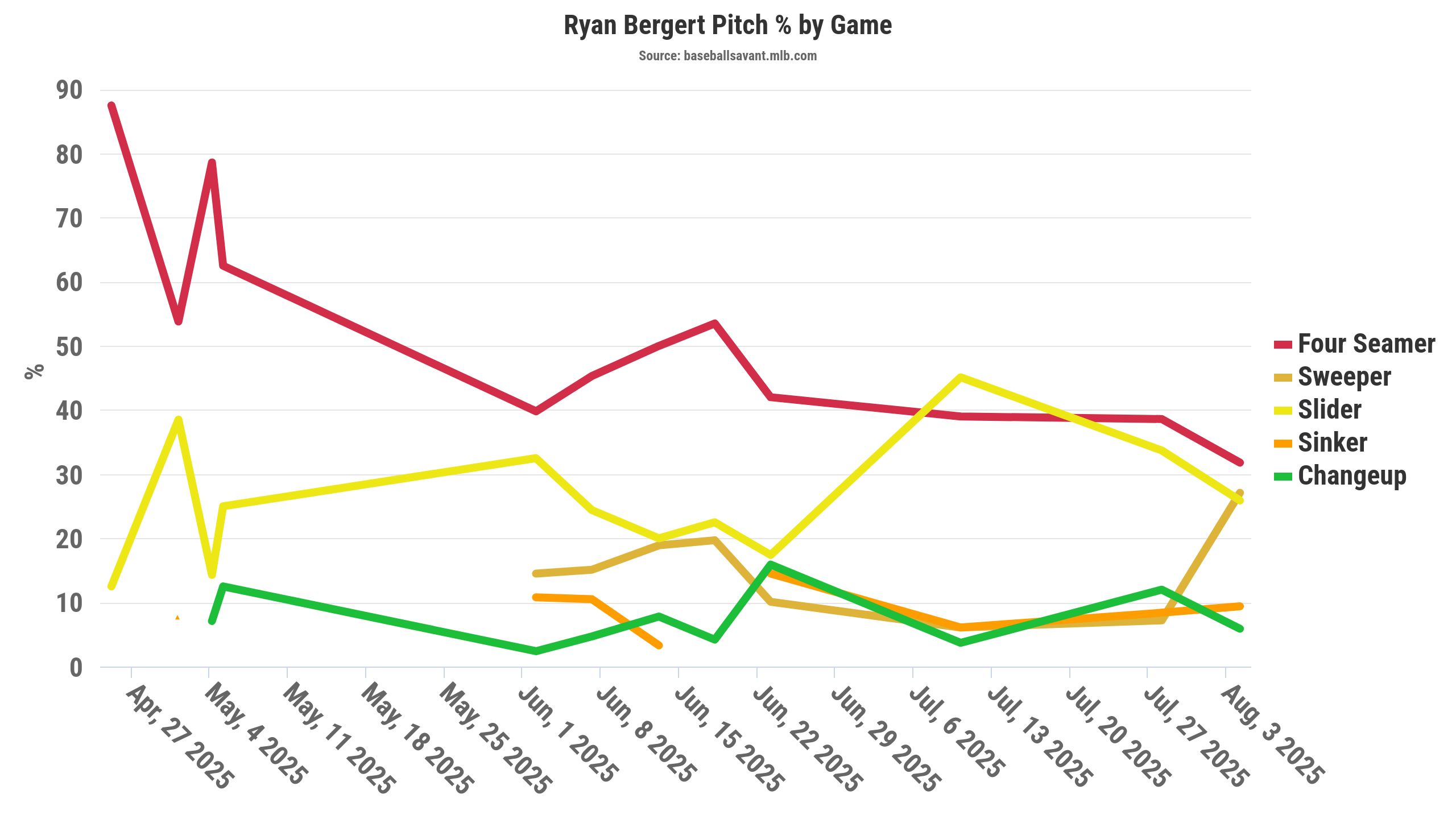
The sweeper has been a bit of an odd pitch for Bergert. In his first two starts, June 3 and June 8 on the chart above, he threw a bunch of sweepers and did not get a single swing and miss. In his next two starts, June 14 and June 19, he got a swing and miss on his sweeper about 30 percent of the time. But after that June 19 start, as you can see, it became his fourth or fifth choice among his pitches.
On Tuesday, Bergert got a whiff rate of 18 percent on his sweeper. Four balls were put in play on the pitch by Boston hitters, and he didn’t allow a hit off of it. It was a solid offering.
While he was throwing more sweepers, he was also getting more break on the pitch than he had in San Diego.
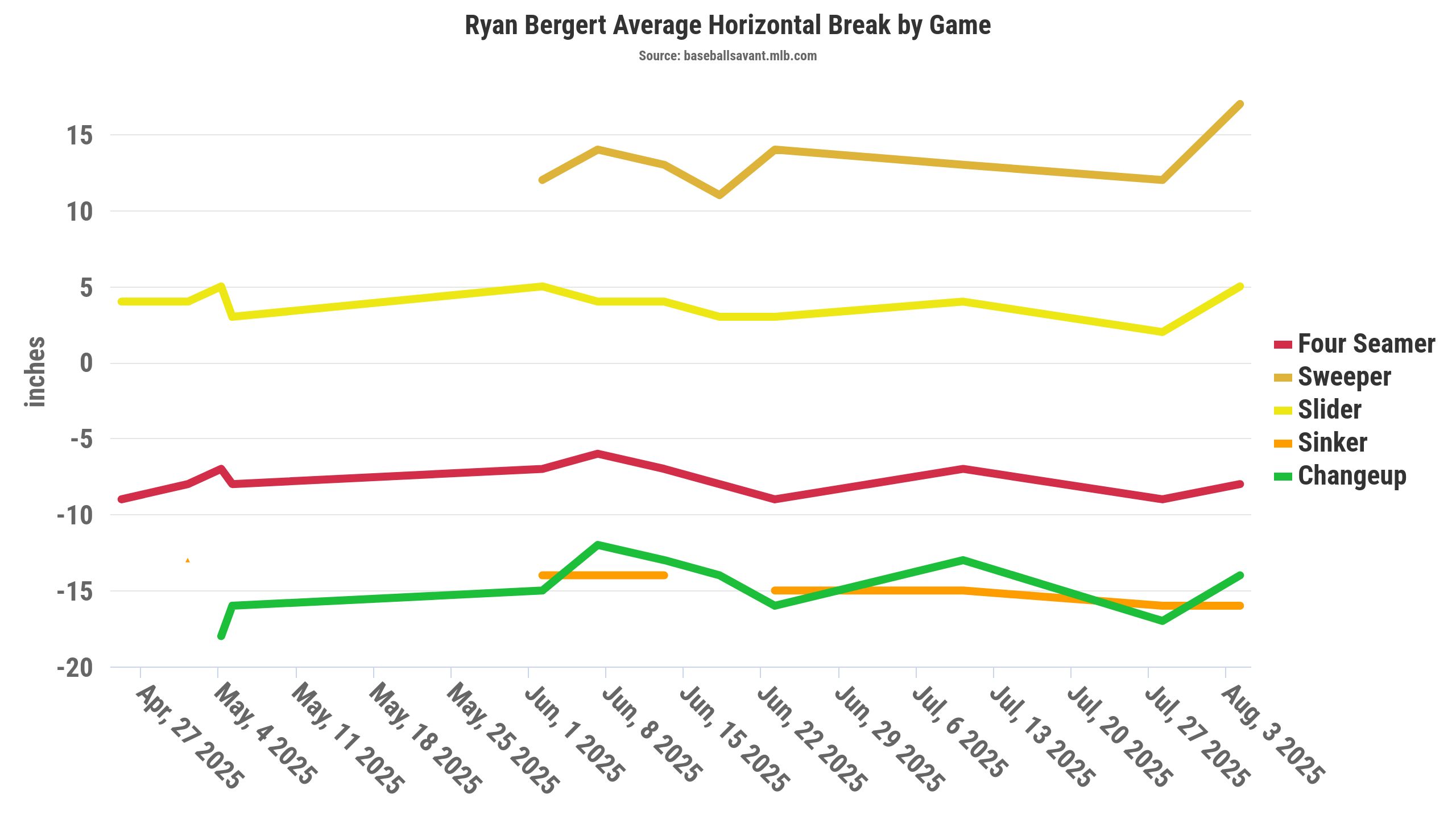
Prevously, the Bergert sweeper was averaging around 13 inches or so of glove-side run. Good movement, but hardly elite. On Tuesday, though, he found on average around 17 inches of glove-side run, routinely touching 19 to 20 inches. This is what 20 inches of glove-side run looks like.
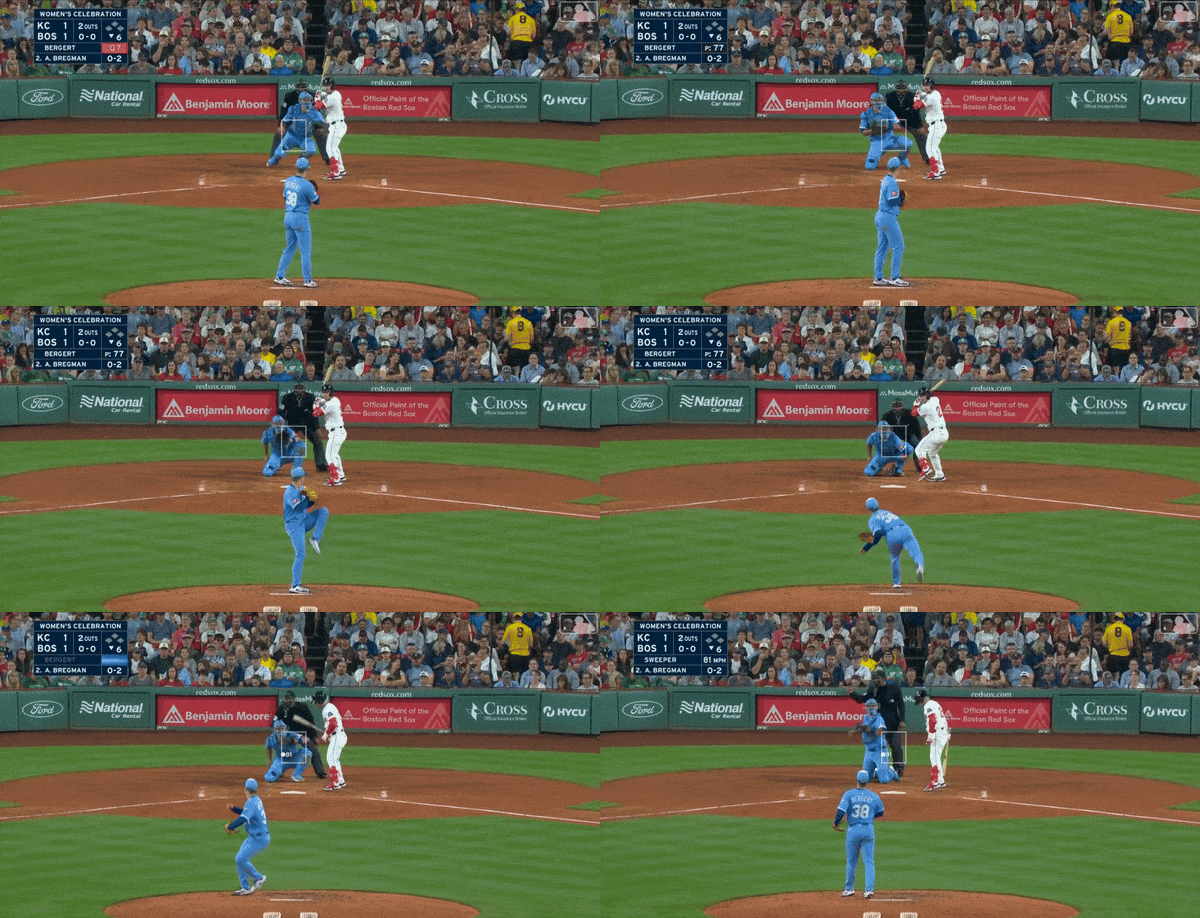
Looks nasty to me.
When you see improved movement like that, you immediately assume the pitcher has discovered a way to add a few RPMs to the old spin rate. If you did assume that, you would be wrong. He actually threw the sweeper with around the same amount of spin that he usually does.
Instead, it looks like he altered his arm angle from his most recent starts, just a bit. He was a little more upright in his motion on Tuesday than he had been over his last four or five outings with the Padres. It’s a subtle difference.
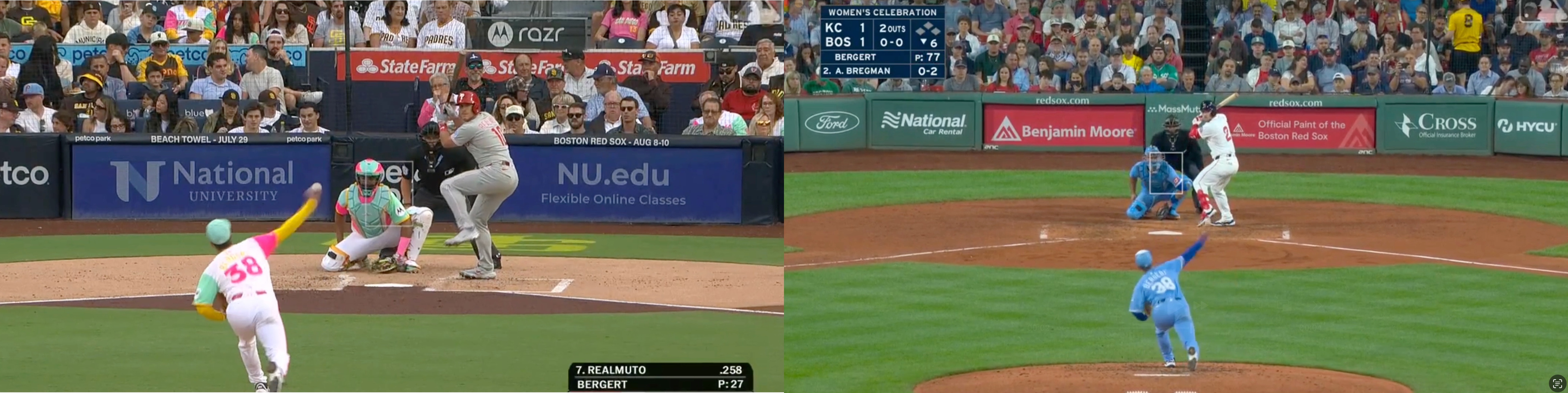
Yeah, it’s difficult to parse from the still frames. But you can see that his arm is a bit higher in the frame on the right. This is how Statcast saw it:
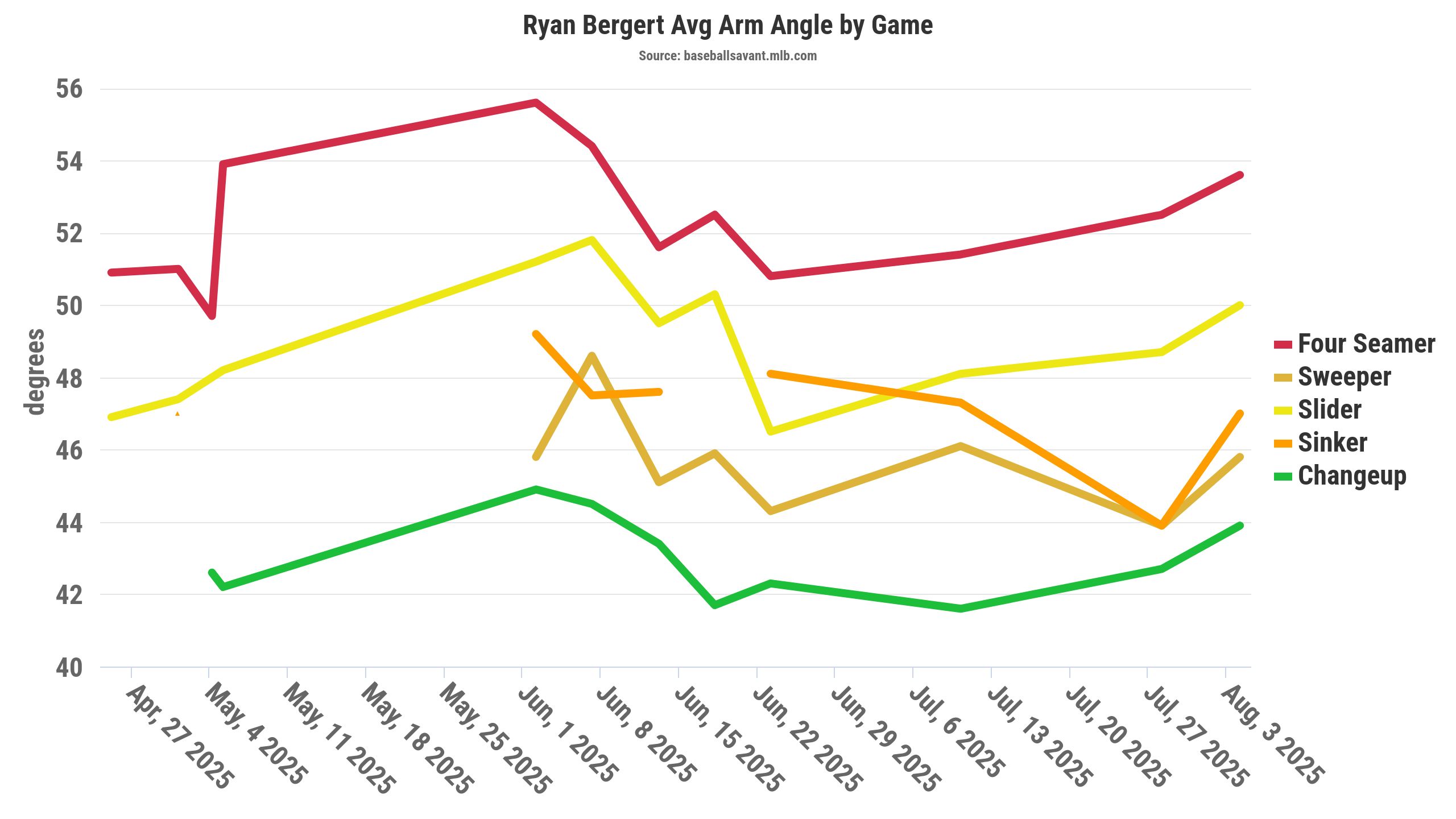
Honestly, it looks as if Bergert is trying to find the slots that work for him. There’s a wide gap between different pitches and their respective arm slots—about 10 degrees from highest to lowest. Seth Lugo by comparison runs a difference of about five degrees. His slow curve excepted. Also, for Bergert, there’s a lot of inconsistency. Remember that he starting pitching for San Diego out of the bullpen, making his first start for the Padres on June 3.
So is the slightly more upright release point responsible for the increased glove-side run? From the chart above, Bergert also added horizontal movement to his slider, a pitch that comes in about 5 mph faster than the sweeper. Maybe there is something there. I think the Royals pitching coaches really know what they’re doing when they begin to fine tune the sliders and the sweepers, which will make Bergert’s evolution as a starter will be very interesting to track. That four-seam/sweeper/slider trio is a nice foundation.

Here’s how the Royals rotation stacks up this weekend in Minneapolis.
Aug. 8 - RHP Seth Lugo (8-5, 3.06) vs. RHP Joe Ryan (10-5, 2.83) at 6:10 p.m.
Aug. 9 - LHP Noah Cameron (5-5, 2.68) vs. RHP Bailey Ober (4-6, 5.38) at 3:10 p.m.
Aug. 10 - RHP Ryan Bergert (1-1, 2.83) vs. TBA at 12:05 p.m.
That’s a bit of a rotation remix. Lugo and Cameron have been flip-flopped with Bergert pushing ahead of fellow newcomer Bailey Falter. The Royals are using their recent schedule to their advantage to get the best matchups for their club.
Friday’s pitching matchup is tasty. How did the Twins not trade Joe Ryan at the deadline?

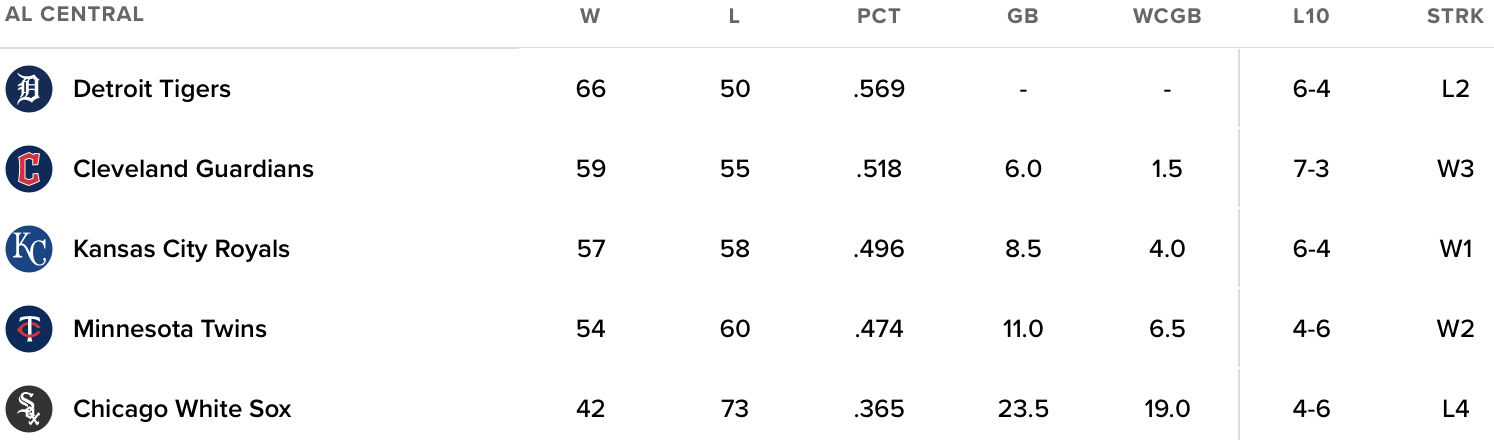
This is how the standings for the American League Central looked exactly one month ago:
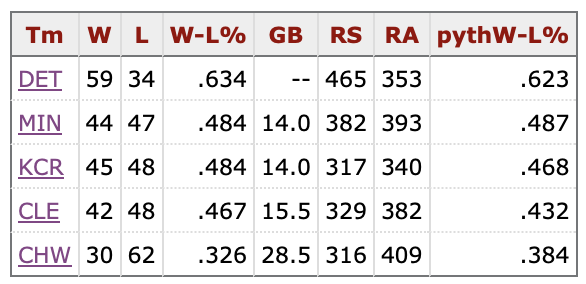
I don’t know about you, but I was ready to cede the division to the Tigers. They looked unstoppable. In a division as steeped in mediocrity as the Central, they were head and shoulders above the rest.
Since then, the unstoppable Tigers have…stopped. Just completely stopped. These are the standings of the games played since July 8.
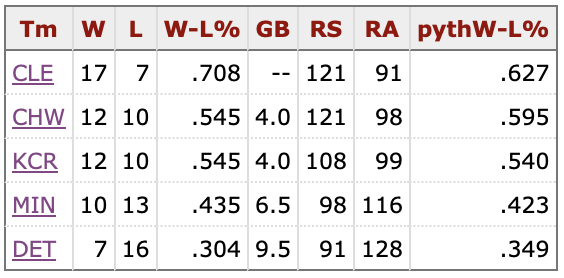
Yikes. That is an extended stretch of poor baseball. Detroit strikes out too much. They have whiffed a whopping 25.8 percent of the time since July 8, the highest rate in the majors over that span. They don’t walk enough. Their 6.1 percent walk rate since July 8 is the second lowest in the majors. Their bullpen has imploded. Collectively, Detroit relievers own a 6.23 ERA and a -0.9 fWAR since July 8. Their starters—Tarik Skubal aside—are just kinda meh.
The Guardians, as you can see from the table above, are playing well. But they didn’t do anything at the trade deadline to try to improve. The White Sox are much better, but come on…they’re the White Sox. The Twins ripped their team to shreds.
Meanwhile, the Royals took steps to improve with a handful of minor additions. They are 3-3 on this current road trip against the two best teams in the AL East. They wrap their road trip this weekend with three against the shell of the Minnesota Twins and follow that with a 10-game homestand that kicks off with three against the Washington Nationals, followed by three against the White Sox.
I know I wrote above that I don’t see the Royals making the postseason. But a universe exists where I can talk myself into the Royals making the tournament as the Central Division champs. The champs!
What?
The Royals have sliced 4.5 games out of Detroit’s lead over the last month. And that’s by playing just two games over .500. The Guardians have cut their deficit by 9.5 games. In a single month. I don’t think Detroit continues to scuffle like they’re doing at this moment, but don’t discount a team in a spiral. As Buddy Bell says, it can always get worse. What Cleveland has done in the last month is, almost at a minimum, what the Royals need to do to get into the race in the Central.
The schedule ahead is favorable. The door is a little more ajar than it was a month ago. The Royals have found a way to improve their roster.
Maybe I’m nuts, but this could get interesting.


Comments ()