Welcome to the new and improved Hitting Lab
The Royals add another hitting coach to the staff.
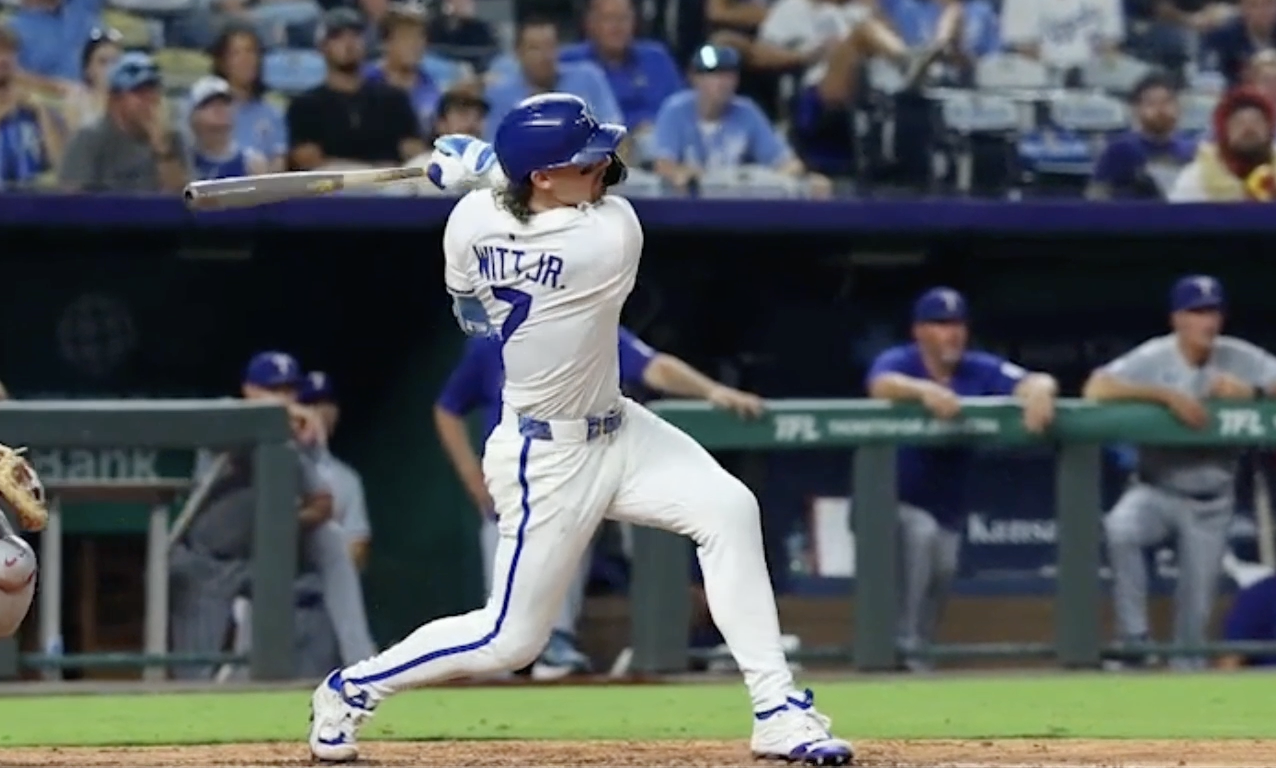
The Royals continued to add to their revamped Hitting Lab on Monday as they announced they’ve hired Marcus Thames as a hitting coach. He will work under Senior Director of Hitting Performance, Alec Zumwalt and alongside other new hire from last week, Kansas City’s own Connor Dawson.
The trio form an interesting staff. You have Zumwalt as the holdover, who is instrumental in instilling the hitting philosophies that will drive the Royals forward. He’s an organizational guy who has worn many hats for the Royals over the years. I am well aware of the invective aimed his way as we all watched the offense struggle last season, but I truly belive the guy to be a baseball rat through and through.
Then there’s Dawson, who played at Olathe North High School and Neosho Community College. He never played professional ball, instead entered the pro coaching ranks for the first time in 2019—after a brief stint at St. Thomas Aquinas High School in Overland Park—as a hitting coach for the Seattle Mariners Arizona Rookie League team. He quickly rose through the ranks to become Seattle’s Minor League Hitting Coordinator in less than two years. Dawson spent the last four seasons as a hitting coach for the Milwaukee Brewers. You don’t move like that unless you have some serious chops.
Thames now rounds out the staff as the guy with major league experience. He played mostly for the Detroit Tigers in a major league career that spanned 10 seasons, winning an AL Pennant with the team in 2006, when he had the best season of his career. He retired in 2011, which I don’t know how that’s possible because I’m fairly certain I saw him play just a few years ago! Thames has spent the last 10 years as a major league hitting coach for the Yankees, Marlins, Angels and, most recently, the Chicago White Sox.
Thames is an important hire as the organization continues to veer heavily into analytics in all stages of the game. Dawson is the new school, data driven guy. Thames is the guy who can help distill that information and break it down in a way the hitters can buy into. He brings the major league gravitas to the Hitting Lab.
Balance is important. A well-rounded staff with different experiences is a must in today’s game. The data is only useful if the players buy in and probably the best way to get the players to buy in is to hear it from a guy like Thames who has been there and done that. The youthfulness of a coach like Dawson is important too, because he can definitely relate to today’s players. There’s something for everyone on this staff.
It’s taken awhile, but the Royals are mirroring on the hitting side what they’ve done on the pitching side. Will they find the same level of success? Nothing is guaranteed, but the process seems solid. At least from where I’m sitting in mid-November.

One of the Hitting Lab’s first order of business is to see if they can unlock anything in the remaining potential of outfielder Kameron Misner. The left-handed hiting Misner was acquired on Monday from the Tampa Bay Rays in exchange for either a player to be named later or cash considerations.
Misner is a southeast Missouri guy, born and raised in Poplar Bluff. He was actually drafted by the Royals out of high school in the 33rd round of the 2016 draft, but chose not to sign and enrolled in the University of Missouri instead. Three years later, that move paid off as Misner was drafted by the Miami Marlins in the competitive balance “A” round as the 35th overall pick.
To get an idea about how Misner was percieved as a player entering that ’19 draft, here’s part of his scouting report from Baseball America:
Misner entered the year as one of the most exciting college hitters in the 2019 class thanks to an exciting set of tools that rival any college player in the class…Once conference play began, however, Misner showed much more swing-and-miss, which started to raise questions about the true quality of his hit tool…There’s not a single tool Misner doesn’t posses, as he’s an above-average runner at 6-foot-4, 213 pounds and plays a solid center field with good instincts and an explosive first step. He also has above-average arm strength that should serve him well in right field, where his size likely allows him to fit best, and he has the plus-plus raw power necessary to profile in a corner outfield position…There is risk with Misner because of his limited track record, but his tools give him tremendous upside as well.
Misner has generally done well as he’s progressed his way through the minors in first the Marlins and then the Rays organization, but that swing-and-miss issue noted in the report above has really taken root. He had a 30 percent strikeout rate in Double-A for the Rays in 2022 and followed that up with a whopping 36 percent whiff rate a year later in Triple-A. He brought that down a bit in each of the next two seasons, but that kind of swing-and-miss doesn’t bode well for him to stick in the bigs. Nor does his Triple-A career wRC+ of around 105 in parts of three seasons for Durham. It’s not like he’s running after pitches out of the zone. The reports on Misner say he has excellent plate discipline and rarely chases.
Despite the red flags, Baseball America still listed him as Tampa’s number 27 prospect ahead of the 2024 season. From that scouting report:
The Rays have tried to help Misner string together better at-bats against lefties, but he remains largely helpless against them. He hit .140 against same-siders in 2023 while striking out 46% of the time. He’s actually competent against righthanders, hitting .252/.387/.520 with 42 extra-base hits. He’s a bottom-of-the-scale hitter if asked to play every day but could produce better numbers in a more limited role.
On the 20-80 scout scale, BA hung a 30 on Misner’s hit tool ahead of the 2024 season. That’s suboptimal to say the least. Additionally, BA noted that he had been eligible for that year’s Rule 5 draft, but went unselected, meaning no team was willing to commit to a full year of Misner on the major league roster.
That Misner is probably, as of this moment, one of the betteroutfielders on the 40-man roster, only underscores how much JJ Picollo has to do this offseason to make his outfield into a productive unit. On an ideal roster, I see Misner as a fifth outfielder—a guy with options who can shuttle back and forth between the big league club and Triple-A. If he’s in The Show, he’s a guy Matt Quatraro could use in the later innings as a pinch runner or defensive replacement or even as a pinch hitter against a right-handed pitcher. He’s this year’s version of Drew Waters. That’s not a skills comp, but a role within the organization comp in that he’s an acquisition with prospect pedigree who could get a bit of time. The cost for Misner is right, at least, and with an outfield like the Royals put on the field last summer, they have to start rebuilding somewhere.
Comments ()