Angel Zerpa traded to the Brewers for Isaac Collins and Nick Mears
The Royals add a high-OBP outfielder in their quest to improve the position.
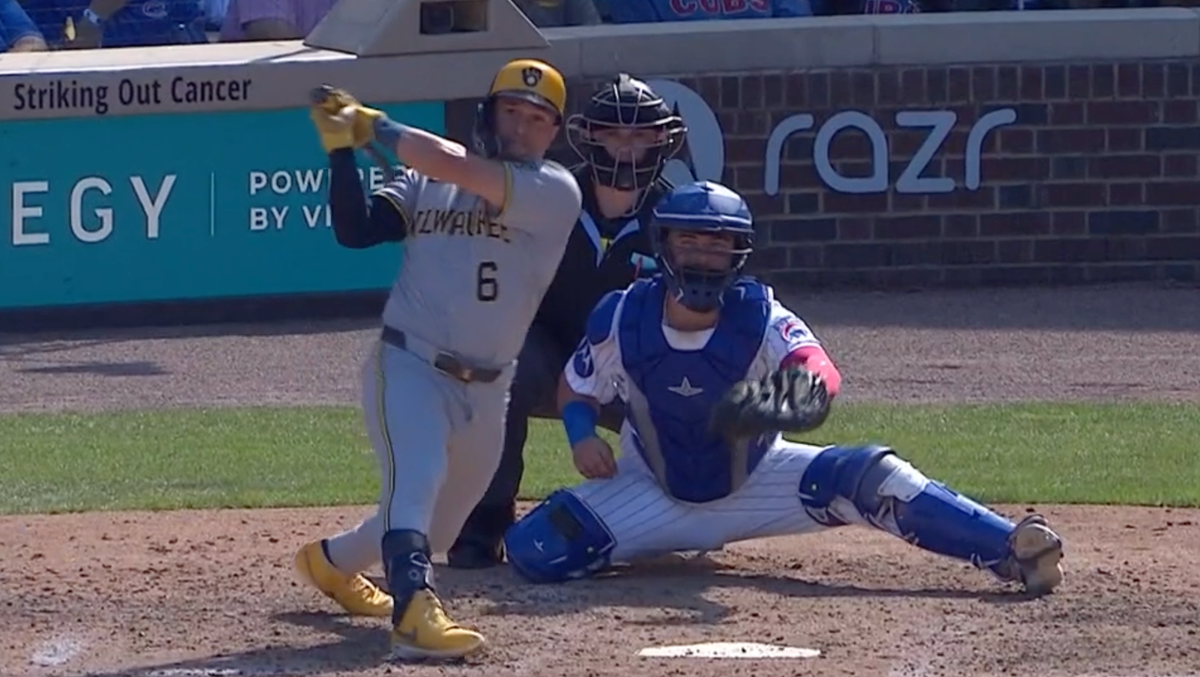
The Winter Meetings ended earlier this week, but the Royals kept the hot stove burning. On Friday, they announced an extension with Maikel Garcia. On Saturday, they made a savvy trade, sending left-handed reliever Angel Zerpa to the Milwaukee Brewers in exchange for outfielder Isaac Collins and right-handed reliever Nick Mears.
I’ll unpack the Garcia extension in the coming days. For the moment, this trade demands our attention. With Collins as the centerpiece, as this is an extremely promising deal for the Royals.

The one thing Collins has always done, is get on base. He exhibited that skill with aplomb in his rookie season for the Brewers. In 441 plate appearances, Collins hit .263/.368/.411. That works out to a 118 OPS+ and 122 wRC+ and an overall offensive performance that propelled him to a fourth-place finish in the NL Rookie of the Year balloting.
Collins gets on base because his chase rate is elite. He doesn’t get himself out or fall behind in the count because he goes after pitches out of the strike zone. He is an extremely disciplined hitter. That discipline has led to a better than league average 12.9 percent walk rate which…well, you saw the OBP above.
The data below is pulled from FanGraphs:
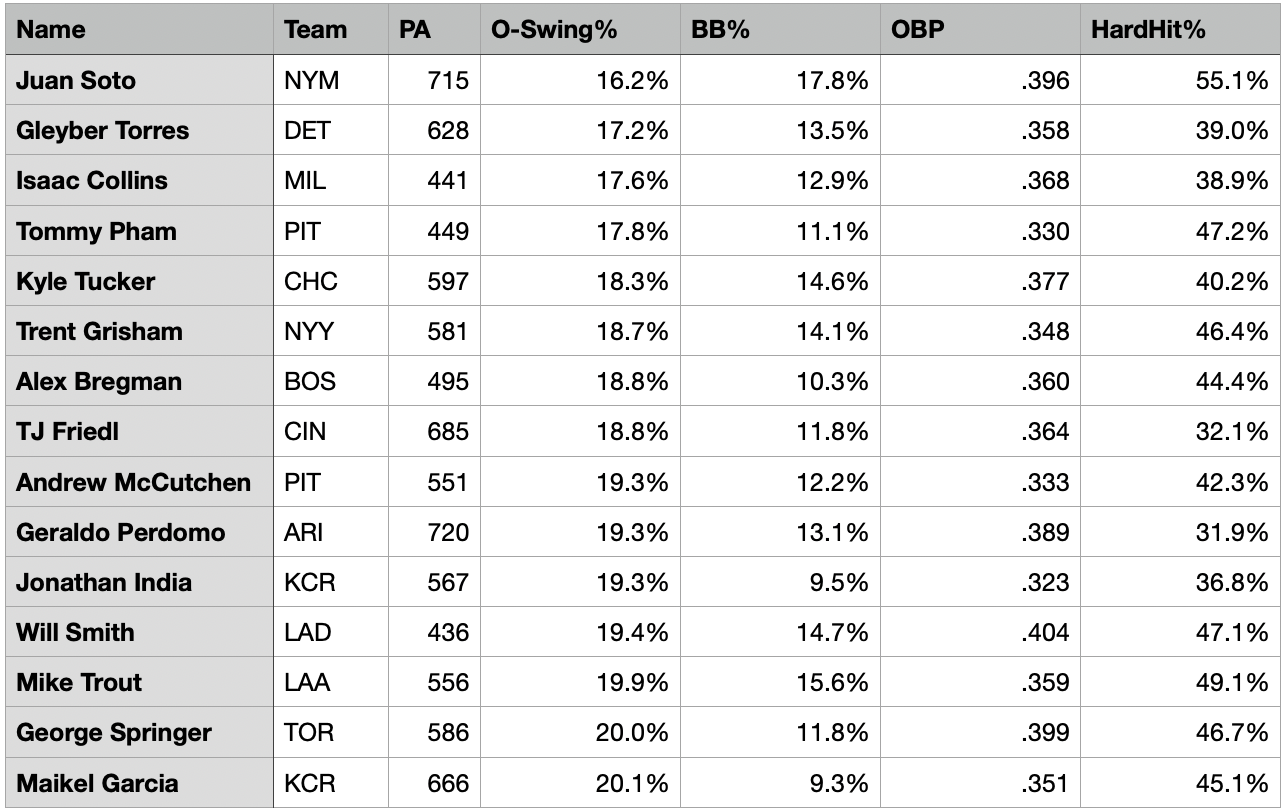
Among hitters with at least 400 plate appearances last summer, Collins had the third-lowest chase rate in the majors. There are some really good hitters on that table. (No comment on Tommy Pham.) I expanded it to represent the top 15 in chase rate so it would include recent extension recipient Maikel Garcia. And look at who was at the 11th spot.
For years, hell, it’s been decades, the Royals downfall on offense has always been the lack of on base percentage throughout their lineup. While you can see that lack of chase doesn’t always translate to strong walk rates or elevated OBP, it’s certainly part of the recipe. The Royals might just be onto something. (Oh my god, I may be talking myself into a bounceback year from India. Someone cut off my Kool-Aid.)
Here’s Collins’ profile from Statcast:
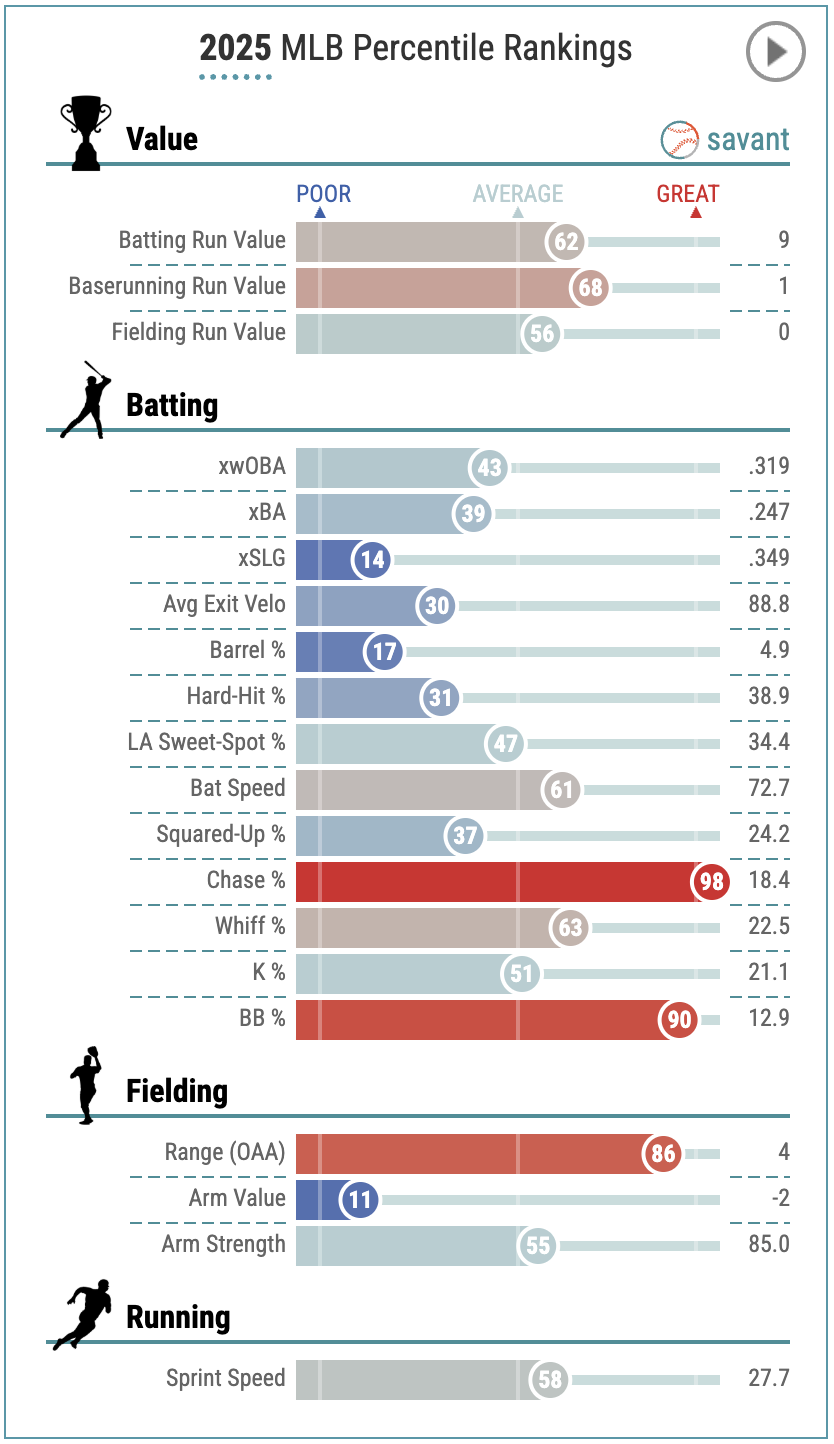
That chase rate is sexy. Good thing, because he certainly doesn’t crush the ball, but he has solid bat speed that can mean success when he’s locked in on pitches over the plate. When he’s locked in on his pitches.
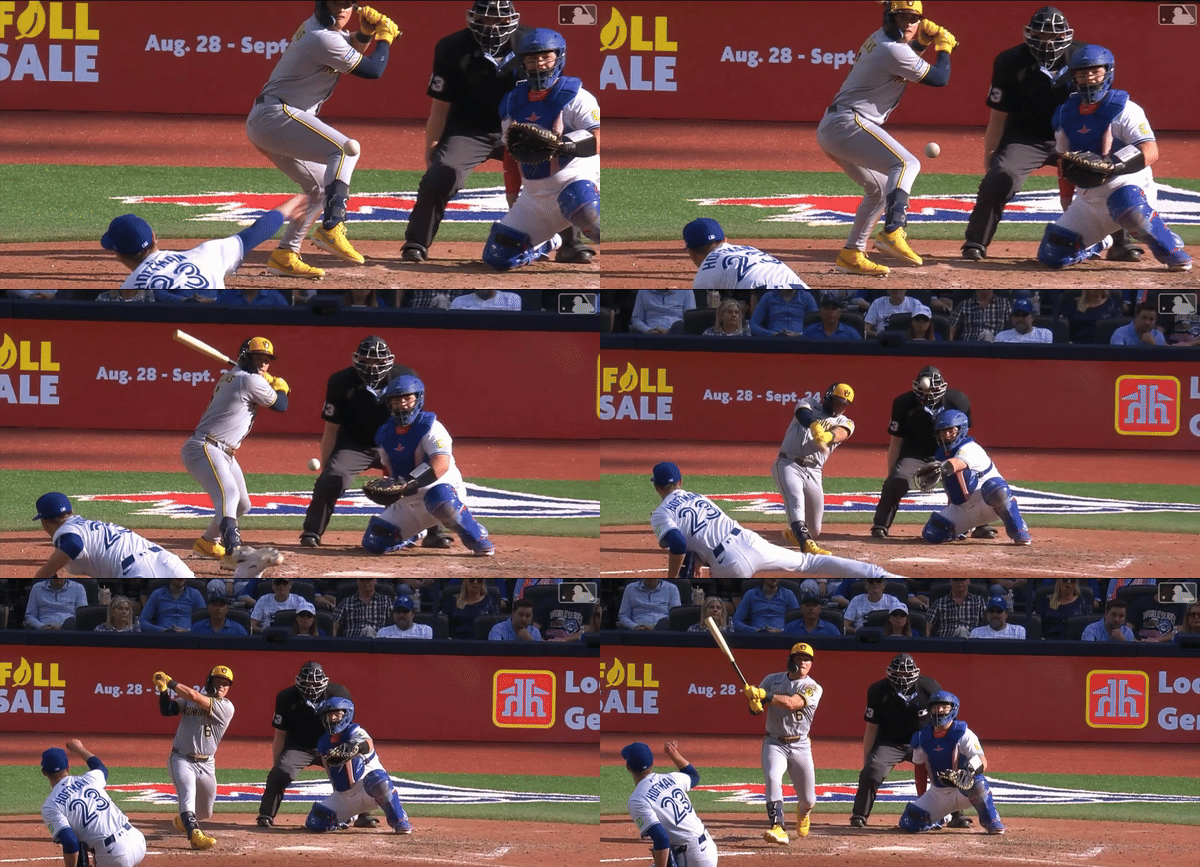
As a switch-hitter, Collins had more success from the left-handed side of the box in his rookie campaign. He hit .280/.390/.415 with a 131 wRC+ from the left side as opposed to .232/.324/.408 with a 106 wRC+ from the right.

If you had never heard of Collins prior to this season, that’s not all that surprising. He was drafted in the ninth round by the Colorado Rockies back in 2019 out of Creighton. Collins progressed through the system, starting out in Low-A ball in 2019 before moving on to A and High-A in 2021 before landing at Double-A for the Rockies in 2022. It was after that season that Colorado left him available in the minor league portion of the Rule 5 draft where he was selected by the Brewers.
A 5’8” switch-hitter, Collins repeated Double-A his first season in the Milwaukee organization and finished the year hitting .269/.424/.431, good for a 134 wRC+. He followed that up in 2024 with a move to Triple-A Nashville (and a cup of coffee in Milwaukee) and continued to exhibit exceptional zone awareness that translated to an elevated OBP. He even added a little more pop, hitting .273/.386/.475 with a 128 wRC+.
Collins is a short dude who doesn’t play a premium position and lacks a standout tool. It’s not surprising he never turned up on prospect lists while he was in the Rockies system and then when he moved on to the Brewers.

I’m not a huge video game guy, but I’ve played a lot of Football Manager, which is a classic soccer management role playing game. In that game, whenever you hire someone for your staff, you have a button you can hit where you ask your new coach or scout to recommend a signing. I was thinking about that when I learned the Royals traded for Collins, who would be reunited with his old Brewers assistant hitting coach Connor Dawson.
Here’s what Dawson had to say about Collins last August:
“We’ve kind of targeted a lot of good swing decision guys. We value it. (Collins has) proven it throughout his career in the minor leagues too. Honestly, swing decisions are more of a transferable skill than a lot of other things.
“A big part of it is our philosophy is swing at strikes, don’t swing at balls. When you have guys that can do that, it’s pretty valuable. It’s maybe the most controllable thing when it comes to hitting and you just want to latch onto the things that are controllable.”
You have to believe that Dawson was consulted on this before the Royals made the deal. It sounds like the two have a strong working relationship. And now they get to try to keep it going in Kansas City.

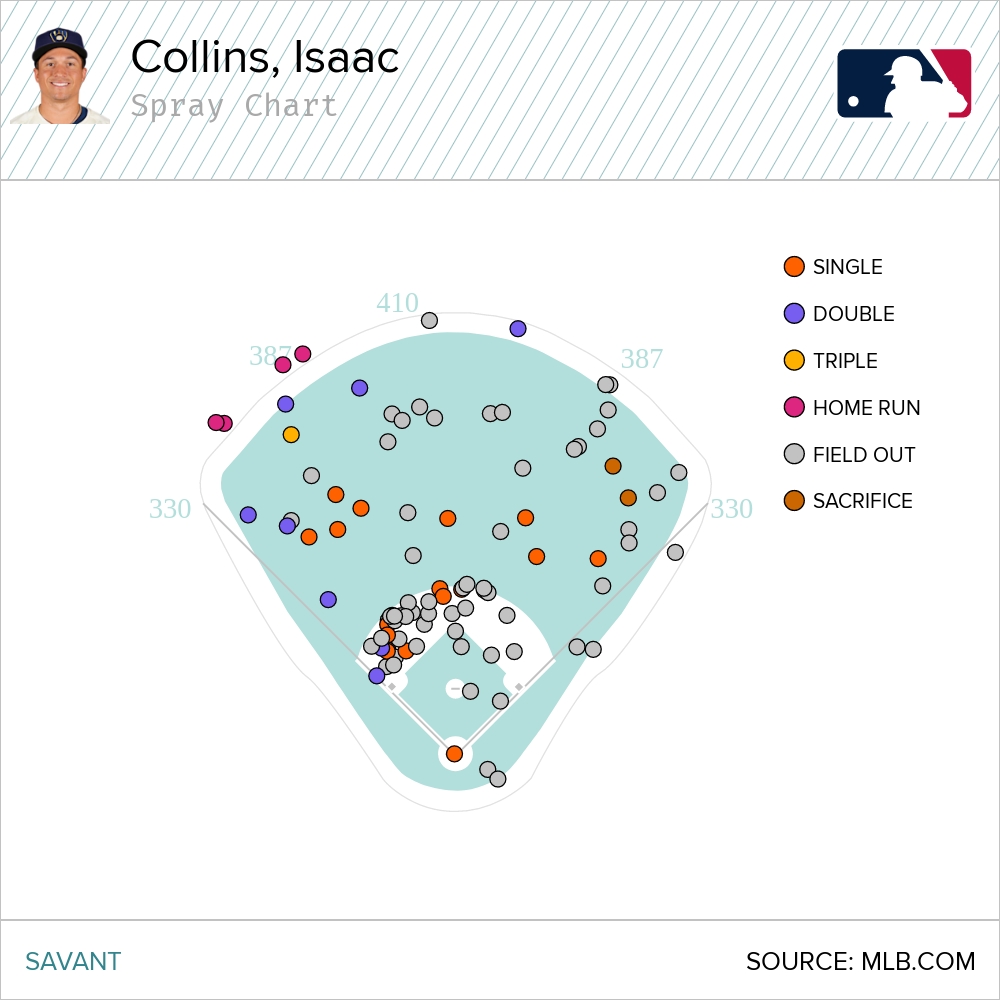
Part of Collins’ offensive success in his rookie season can be attributed to a .326 BABIP. I’m always suspect when it comes to BABIP and assigning luck or predicting regression. Yes, that number is higher than the league average of around .300, but some guys are just naturally better at racking up hits when they put the ball in play. That could be Collins, who pulls the ball, no matter the side of the plate he’s positioned. He laced a line drive as nearly a quarter of balls put in play in 2025. He can also get the ball into the gaps, which, as we all know, will play extremely well at Kauffman Stadium.
This is Collins’ spray chart from the right side of the batter’s box:
And Collins as a left-handed hitter:
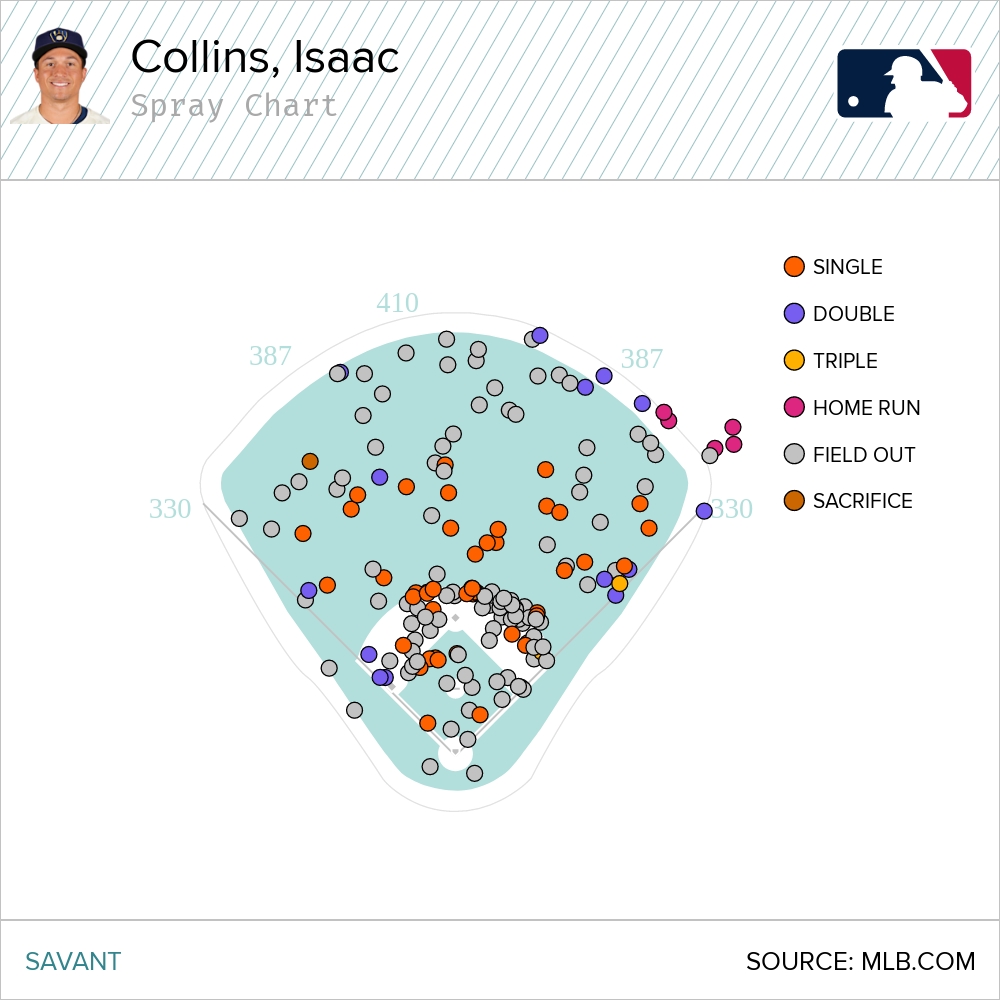
He’s generally posted higher than average BABIP rates throughout his minor league career. Plus, his approach at the plate is predicated on giving himself an advantage. Not only does he have an acute awareness of the strike zone, he also looks for his pitch in a particular part of said zone.
Here’s Collins talking about his approach at the plate:
“Even in college that (not chasing after pitches outside of the strike zone) was my M.O. I always controlled the zone well. I had a natural feel for the zone. But I think I realized the importance of it in (Double-A) Biloxi, where I realized if I can control the zone, then one, I’m going to get on base, which is extremely valuable, and two, I’m going to get good pitches to hit. So now in the big leagues, that was my big thing.
“Don’t chase results. Don’t chase hits. Make good swing decisions. If I can control the zone up here eventually I’m going to get good pitches to hit and put good swings on those balls.”
While it’s certainly possible Collins overachieved as a hitter in 2025, his approach and swing decisions have me believing that he will generally be a better than league average hitter. He can take the left-handed hitting side of a platoon (perhaps with newly-acquired Lane Thomas as the right half). As a switch hitter who can put the ball in the gaps, Collins could also get his fair share of PAs against left-handed pitching without being a complete drag on the lineup.
I love this quote from him about his approach and what he does to prepare. He begins by checking out the opposing pitcher’s repertoire and goes from there.
“Percentages, what does he like, what does he throw in certain counts. But at the end of the day he has his plan and I have mine. And mine is pretty simple. Assume it’s a fastball over the middle of the plate until it’s not. If it’s not, trust my eyes and trust my swing that I’ll be able to spit on spin down and fastballs up.”
Avoid the breaking pitches that drop down and out of the zone and the heaters that are elevated. Simple. Yet Collins actually puts that into practice. From Savant, this hex bin chart illustrates the pitches at Collins swung at last year.
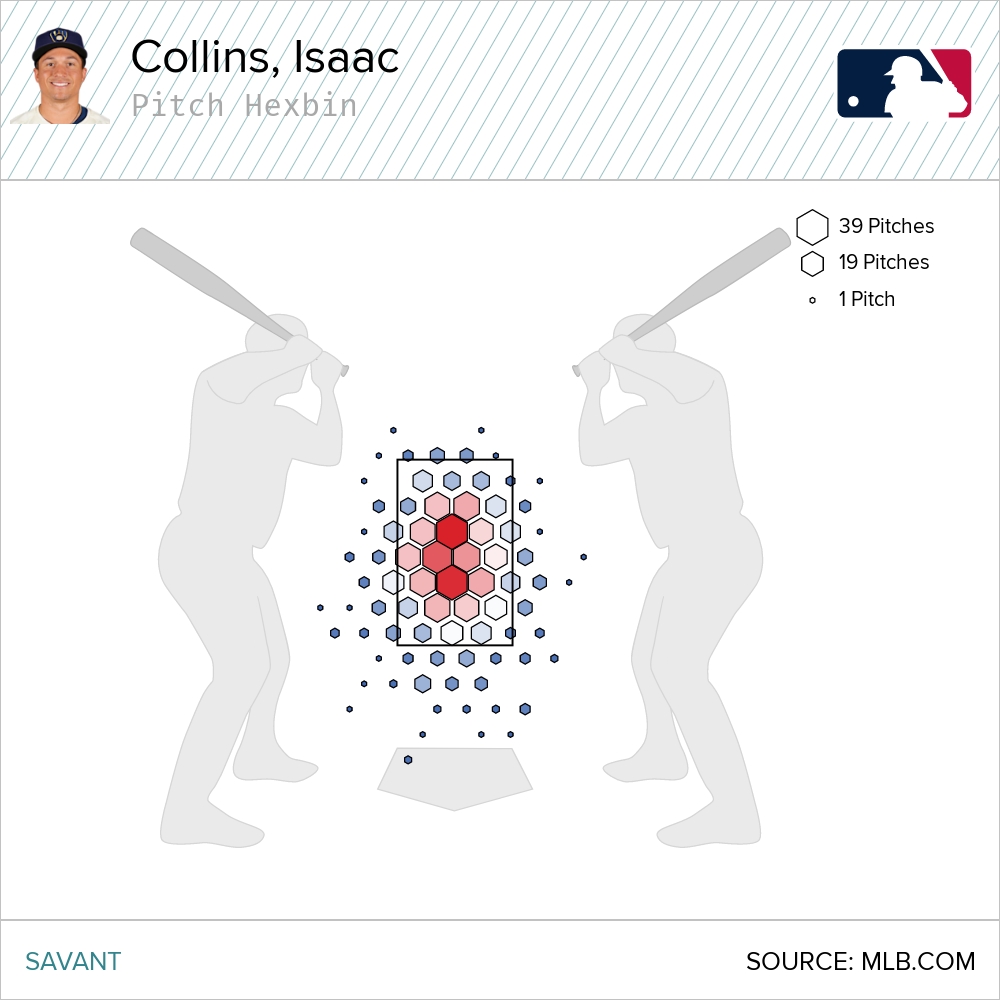
Easy to see why his plate discipline is described as elite.
Defensively, Collins is a fair left fielder. He’s not going to win a Fielding Bible award, but he’s not a butcher when it comes to the glove, either. He has a solid reaction time in the outfield and was rated as fourth-best among all outfielders from Statcast on his jumps. He has a decent arm and runs relatively well. I just watch this guy and, along with his profile and approach, figure him to be a solid performer going forward.

Mears strikes me as a run of the mill bullpen guy, but with one standout stat. He finished 2025 with a 3.49 ERA, but a 4.35 xERA and 3.86 FIP. His strikeout rate was a career low 7.3 SO/9, but he tempered that with a personal best 2.1 BB/9. Control has always been an issue for Mears, but he seemed to have tamed that last summer. The question going forward will be, can he do it again?
Mears is a four-seam/slider guy who rides the heater at around 95 mph. The slider is a weapon as opposing batters hit just .141 with a .282 slugging percentage against it last year. His overall chase rate, at 34 percent, is near elite. You’ll always target someone who has a knack for missing bats. He doesn’t profile as a late inning guy, but can be someone who can enter Matt Quatraro’s circle of bullpen trust as a guy to form that bridge between the starter and the back of the bullpen.

I’ve always had a soft spot for Zerpa, but truth be told, it’s more of a blind spot. The numbers, and performance, have never justified anything beyond the trust of a sixth inning reliever type. His career 7.6 SO/9 is nothing special in this day and age. Nor is his 19.7 percent strikeout rate. Although, to be fair, both rates have ticked up the last couple of seasons.
Zerpa is primarily a ground ball pitcher, which, if you’re a reliever who isn’t going to miss a lot of bats and won’t strike out many hitters, is a solid attribute to possess. However, he still generally finds a way to get bitten by the home run bug. His career HR/FB rate is 15.4 percent, which means that, despite keeping the ball on the ground for a good percentage of balls put into play against him, his HR/9 is a not-so-ideal 1.12 for his career.
If I was looking for something nice to say about Zerpa it’s that he does have a solid command of the strike zone. His walk rates have generally been very strong, with a 2.7 BB/9 which translates to a 7 percent walk rate for his career. There’s value in that from a reliever.
I’ve written recently that the prevailing trend among teams that are acquiring pitching this winter is that they’re looking beyond ERA to evaluate quality of arms. Perhaps that’s what Milwaukee sees. Last year, Zerpa posted a 4.18 ERA against a 4.00 xERA and 3.86 FIP. Still, we’re talking about a left-handed reliever who with a 96.5 mph heater who doesn’t get a ton of chase and just doesn’t miss enough bats. In the last three seasons, Zerpa has thrown 161 innings and accumulated a 0.6 fWAR.
The Brewers do seem to have the code cracked for taking mediocre pitchers and turning them into something special. Maybe that happens for Zerpa in Milwaukee. That’s the gamble they’re taking with this trade and, for the Royals, that’s always a danger these days. I understand why JJ Picollo would take that chance though, given what the Brewers were willing to surrender for the opportunity to attempt to turn Zerpa into another Milwaukee pitching success story.

As a rookie last year, Collins has just over a year of service time to his credit. That means he won’t be eligible for arbitration until after the 2027 season and the Royals control him for the next five seasons. He also has all three options, should the Royals need to send him to the minors for any reason. Mears is eligible for arbitration for the second time this winter and is set to make an estimated $1.6 million, slightly more than the $1.2 million Zerpa is projected to make as an arbitration-eligible player for the first time.
This is an extremely good, low-risk trade for Picollo and the Royals. They gave up a lefty reliever for controllable outfielder who should be able to get on base and a right-handed reliever who gets hitters to chase. In other words, Mears can have Zerpa’s spot in the bullpen and the Royals net a high-OBP left fielder? Sign me up for that all day, everyday. This trade certainly feels as though it’s tilted in the favor of the Royals.
An outfield of Collins-Kyle Isbel-Jac Caglianone with Thomas as a right-handed hitter who can play any of those three positions and hits lefties well forms an outfield that is already vastly improved from what we suffered through in 2025.
Still, there is work to be done. The way Picollo has moved to this point in the offseason, I strongly doubt the team is finished. Besides, the Royals still haven’t acquired what I would consider to be an impact outfield bat. However, in acquiring Thomas as a rebound candidate and Collins as a guy with exceptional knowledge of the strike zone, they’ve done some fine work improving the position.
Comments ()